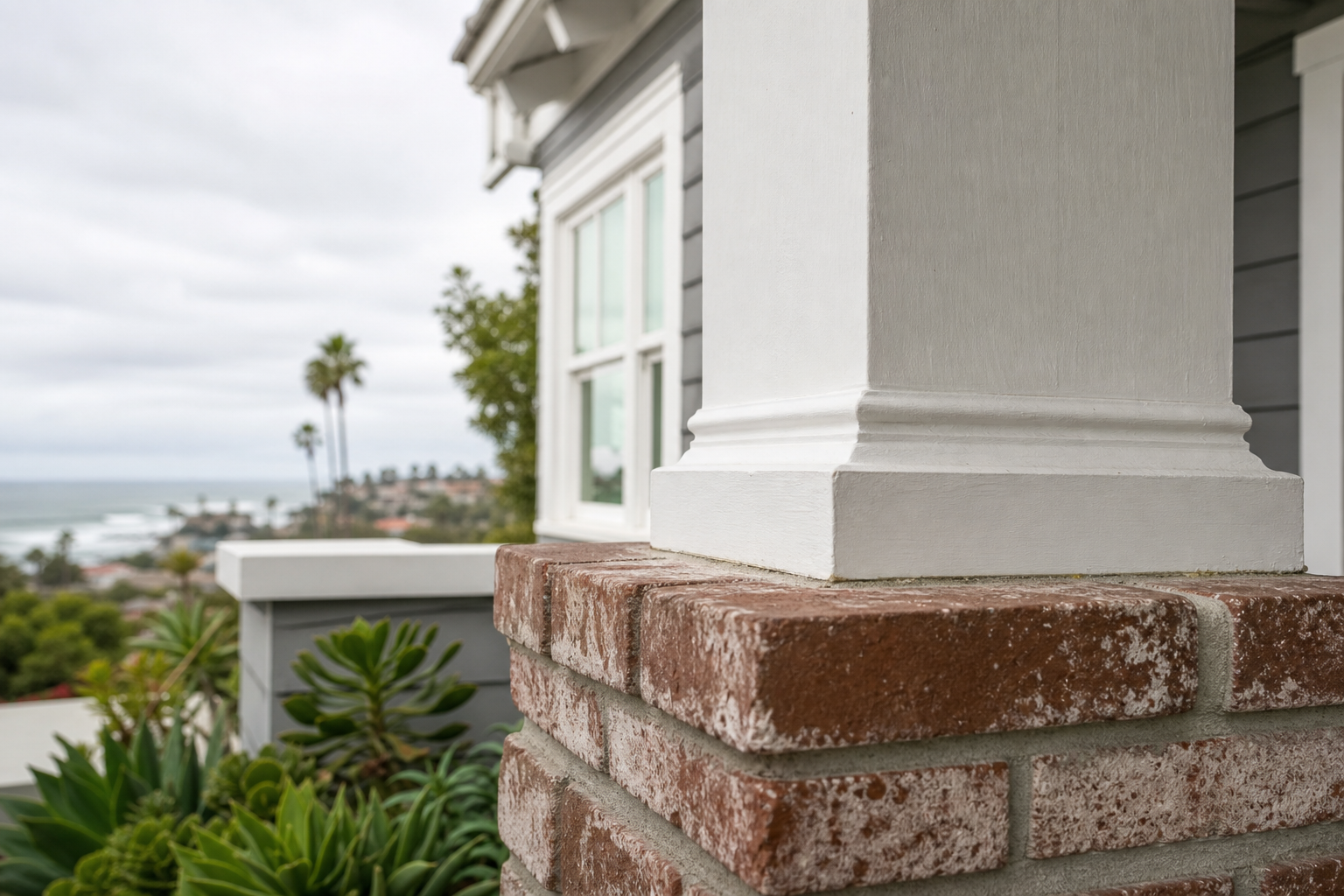
Homes within walking distance of COASTER stations in North County San Diego command measurable price premiums, research documents 17% higher values for single-family homes and 46% for condos near stations. For sellers in Encinitas, Solana Beach, Carlsbad, and Oceanside, rail access is a genuine marketing asset worth highlighting in your listing strategy.
Does living near a COASTER station actually boost your home’s value in North County San Diego?
Yes, and the premium is documented. Research on San Diego’s COASTER corridor found single-family homes near North County stations sell for roughly 17% more than comparable properties away from stations, and condominiums show premiums as high as 46%. For sellers in Encinitas, Solana Beach, Carlsbad, and Oceanside, proximity to coastal rail isn’t just a lifestyle convenience, it’s a pricing argument you can make in your listing.
What the Research Actually Shows About Rail and Property Value
The most detailed analysis of this effect comes from a value-added study on San Diego’s transit corridors, published by Reconnecting America. It’s historical research, not a 2026 snapshot, but the findings are specific to the COASTER line and North County, not national averages pasted onto a San Diego map.
Here’s what it found for properties near COASTER commuter rail stations in North County:
- Single-family homes: approximately 17% price premium compared with similar homes not near stations
- Condominiums: approximately 46% price premium, the walkable, lower-maintenance lifestyle amplifies rail’s appeal for condo buyers
- Multifamily parcels: positive capitalization effects of 2–6% along COASTER and Trolley corridors
- Commercial parcels near downtown COASTER stations: premiums as high as 91%
These numbers don’t mean every home within a mile of a station sells for 17% more. Condition, street, build year, and the specific distance to the tracks all matter. But the directional signal is clear: walkable access to rail is a value driver, not just a lifestyle footnote.
The National Association of Realtors has consistently found that transit access ranks among the top location features buyers prioritize, particularly as remote work has made occasional commute trips, rather than daily ones, more common. That shift plays directly into the COASTER’s appeal: you don’t need to ride it every day for it to matter to buyers.
The Trade-Off: Noise vs. Access
I’ll be straight with you here. Not every buyer sees a rail line as a pure amenity. Homes immediately adjacent to the tracks face a real trade-off: train noise, periodic horn sounds at grade crossings, and some vibration. For those properties, the research still shows net-positive price effects on balance, but only when sellers address the noise question directly rather than hoping buyers won’t notice.
In my experience working with sellers near the Encinitas and Solana Beach stations, the listings that hold their value best are the ones that lean into the lifestyle story (walkability, beach access, Cedros Design District, downtown Encinitas) while being upfront about the trade-offs. Buyers who want rail access already know trains run on the tracks. What they’re deciding is whether the lifestyle is worth it, and for a lot of North County buyers, it is.
The Federal Transit Administration’s research on transit-oriented development consistently supports this: properties in walkable station catchment areas benefit more from rail proximity than properties that are technically “near” a line but require a car to reach the platform.
The North County COASTER Stations and What Each Market Looks Like
Not all station areas are the same. Here’s how I think about each North County stop from a seller’s perspective:
Oceanside Transit Center
The northern gateway of the COASTER network. It connects to the Pacific Surfliner (LA and Orange County service), the SPRINTER (inland to Escondido), and the COASTER itself, making it the most multimodal hub in North County. For sellers, that connectivity story reaches buyers commuting to San Diego, Orange County, and beyond. Recent SANDAG regional planning continues to invest in this corridor, which supports long-term desirability.
Carlsbad Village and Carlsbad Poinsettia
Two distinct submarkets. Carlsbad Village is walkable, mixed-use, and coastal, the station is steps from restaurants, the beach, and the village core. Poinsettia serves a more suburban profile with proximity to business parks and retail. Both benefit from rail access, but Village properties carry a stronger walkability premium in listings.
Encinitas
Strong lifestyle draw. The station sits close to a walkable downtown with restaurants, surf shops, and the broader coastal culture that draws buyers to this market. Recent Zillow market data puts Encinitas’s median sale price at $2,190,000 with a median of 38 days on market, reflecting the persistent demand for this area. For sellers near the station, the “car-optional living” angle resonates with a real segment of the buyer pool.
Solana Beach
One of the most prominent COASTER and Pacific Surfliner stops on the corridor. The station area includes the Cedros Design District, beach access, and a genuinely walkable environment. Listing agents here routinely call out the “park-once and walk” lifestyle, and buyers relocating from LA or Orange County often specifically ask about Surfliner access, it keeps weekend trips home or to the city feasible without a car.
Here’s a look at current market conditions across the key North County areas along the coastal rail corridor, based on recent Zillow market data (trailing approximately 90 days, as of August 2026):
| Area | Median Sale Price | Median Days on Market |
|---|---|---|
| Encinitas | $2,190,000 | 38 |
| Carlsbad | $1,554,000 | 28 |
| San Marcos | $980,000 | 38 |
| Escondido | $880,000 | 28 |
| Oceanside | $857,500 | 21 |
The coastal rail corridor runs through the three highest-priced markets in this table. That’s not entirely explained by rail, coastal location, lot sizes, and neighborhood amenities all contribute, but it illustrates the broader premium that coastal, transit-accessible North County commands over inland alternatives.
What This Means If You’re Selling Near the COASTER
Make the Rail Access Part of Your Marketing Story
Most sellers treat the COASTER as background infrastructure. The ones who price well and sell faster are the ones whose listings explicitly call it out: walking distance to the station, specific travel times to downtown San Diego or Sorrento Valley, Surfliner access for LA trips. These aren’t throwaway lines, they’re decision criteria for a real segment of buyers.
Buyers relocating from Los Angeles or Orange County often ask about the Pacific Surfliner specifically. The Pacific Surfliner connects San Diego to Los Angeles and Santa Barbara, with stops at every North County COASTER station. For a buyer keeping ties to LA, that’s a meaningful amenity, and it should show up in how you position the home.
This is exactly the kind of positioning question I work through with sellers before we list. Getting the marketing angle right from day one matters more than most sellers realize, and if you want to understand how pricing strategy connects to this, here’s how I think about setting the right list price in North County.
Disclosure: What Sellers Near the Rail Line Need to Know
California requires sellers of 1-4 unit residential properties to complete a Transfer Disclosure Statement (TDS) and, in standard practice across San Diego County, a Seller Property Questionnaire (SPQ), a California Association of REALTORS® form that asks sellers to identify known nuisances, including noise and vibration sources.
For properties near the COASTER or Surfliner, that means disclosing train noise, any vibration you’ve noticed, and any mitigation work you’ve done, upgraded windows, added insulation, sound walls. There’s no special “rail-only” disclosure statute in San Diego County, but California’s general disclosure framework expects sellers to disclose material facts that could affect a buyer’s decision. Train noise near an active corridor qualifies.
Being upfront here actually helps sellers. Buyers who are bothered by train noise will find out during their inspection period regardless. Disclosing it early, alongside the lifestyle benefits and any mitigation you’ve done, keeps the transaction cleaner and reduces the risk of renegotiation after inspections.
Transfer Tax and Closing Costs for Rail-Adjacent Sales
One question I occasionally get: does being near the COASTER affect your closing costs or transfer tax? The short answer is no. The San Diego County Recorder applies the same documentary transfer tax rate to all taxable property conveyances in the county, regardless of location. The rate is set by California Revenue and Taxation Code §11911 at $0.55 per $500 (or fraction) of property value, the same whether your home is in Encinitas, Escondido, or anywhere else in the county.
Who pays that tax is a different question. It’s commonly negotiated between buyer and seller as part of the purchase contract, not fixed by statute for San Diego County. Your escrow officer will calculate it and reflect it on your closing documents; confirm the allocation in your own contract rather than assuming one party automatically covers it.
For a full picture of what selling will cost you net, that’s a conversation worth having before you list, not after you’re already in escrow.
I’ve been helping buyers and sellers navigate North County’s coastal markets for more than 25 years. If you’re thinking about listing near the Encinitas, Solana Beach, Carlsbad, or Oceanside stations, I’d be glad to show you how I’d position your property and what the current comp picture looks like for your specific street. You can read what my clients say about working with me on Google and Zillow.
Frequently Asked Questions
Does living near a COASTER station in North County really boost my home’s value, or is it just a lifestyle perk?
It’s both, and the two aren’t separate. Research published by Reconnecting America documented 17% price premiums for single-family homes and 46% premiums for condominiums near North County COASTER stations compared with similar properties away from stations. That premium is driven by buyers who value the lifestyle, walkability, commute convenience, access to downtown San Diego and the coast, and are willing to pay for it. The lifestyle perk is the value driver.
Will train noise hurt my resale value, or do buyers see the COASTER as an amenity?
For most properties within walking distance of a station, the net effect is positive, buyers seeking rail access already expect some train activity and weigh it against the lifestyle benefits. Properties immediately adjacent to the tracks face a more nuanced trade-off, and the key is addressing noise candidly in your listing while highlighting any mitigation you’ve done (upgraded windows, sound insulation) and the access benefits. Buyers who are genuinely bothered by train noise will self-select out, which actually leads to cleaner offers from buyers who want what your property offers.
If I sell a home near the rail line, do I have to disclose train noise or vibrations?
Yes, in practice. California’s disclosure framework requires sellers to disclose material facts that could affect a buyer’s decision, and the Seller Property Questionnaire (SPQ), standard in San Diego County transactions, specifically asks about known noise and vibration sources. There’s no separate “rail disclosure” statute, but known train noise and any vibration you’ve experienced should be noted. Being upfront protects you and keeps the transaction cleaner; buyers discover these things during their inspection period regardless.
How does COASTER proximity show up in appraisals and comps?
Appraisers use paired-sales analysis, comparing your home against similar homes that sold nearby, so the premium shows up implicitly through the comps themselves rather than as a separate line item. In station-adjacent neighborhoods where walkability and transit access are consistently reflected in sale prices, those comps already embed the premium. The challenge is making sure your listing is being compared to the right comps: homes with similar transit access, not just similar square footage in a broader zip code.
Should I wait to list until after the planned COASTER downtown extension opens?
That’s a timing question with no universal answer, it depends on your financial situation, how long the extension timeline runs, and what the market is doing in the interim. What I’d caution against is holding a property in anticipation of a future infrastructure event when current buyer demand for coastal rail access is already present. If your home is marketable today, waiting on a construction timeline introduces its own risks. This is exactly the kind of decision I’d walk through with you based on your specific property and goals.
Is the San Diego County transfer tax higher for coastal properties near the COASTER?
No. The San Diego County Recorder applies the same documentary transfer tax rate to all taxable property conveyances in the county, there’s no coastal surcharge or rail-adjacency premium in the tax calculation. The rate is set by California Revenue and Taxation Code §11911 and applies uniformly. Who pays it is negotiable between buyer and seller in the purchase contract.
The COASTER and Pacific Surfliner corridors are genuine value drivers for North County coastal properties, but only if your listing strategy makes that case clearly. Request a free home valuation and I’ll show you exactly how I’d position your property in today’s market.
Equal Housing Opportunity. Matthew Sorensen is a Broker Associate licensed by the California Department of Real Estate. This article is general information only and does not constitute legal, tax, or financial advice, confirm your own numbers with your attorney, tax advisor, lender, or escrow officer before making any transaction decisions.
- About Matt Sorensen
- Contact Matt

Matt Sorensen is a Broker Associate with Coldwell Banker Realty and a licensed real estate professional since 2000, serving San Marcos and North County San Diego. He specializes in probate and trust home sales, helping trustees and families navigate pricing, disclosures, timelines, and vendor coordination with clear communication and steady guidance. CA DRE Lic. #01293787
Leave a Reply