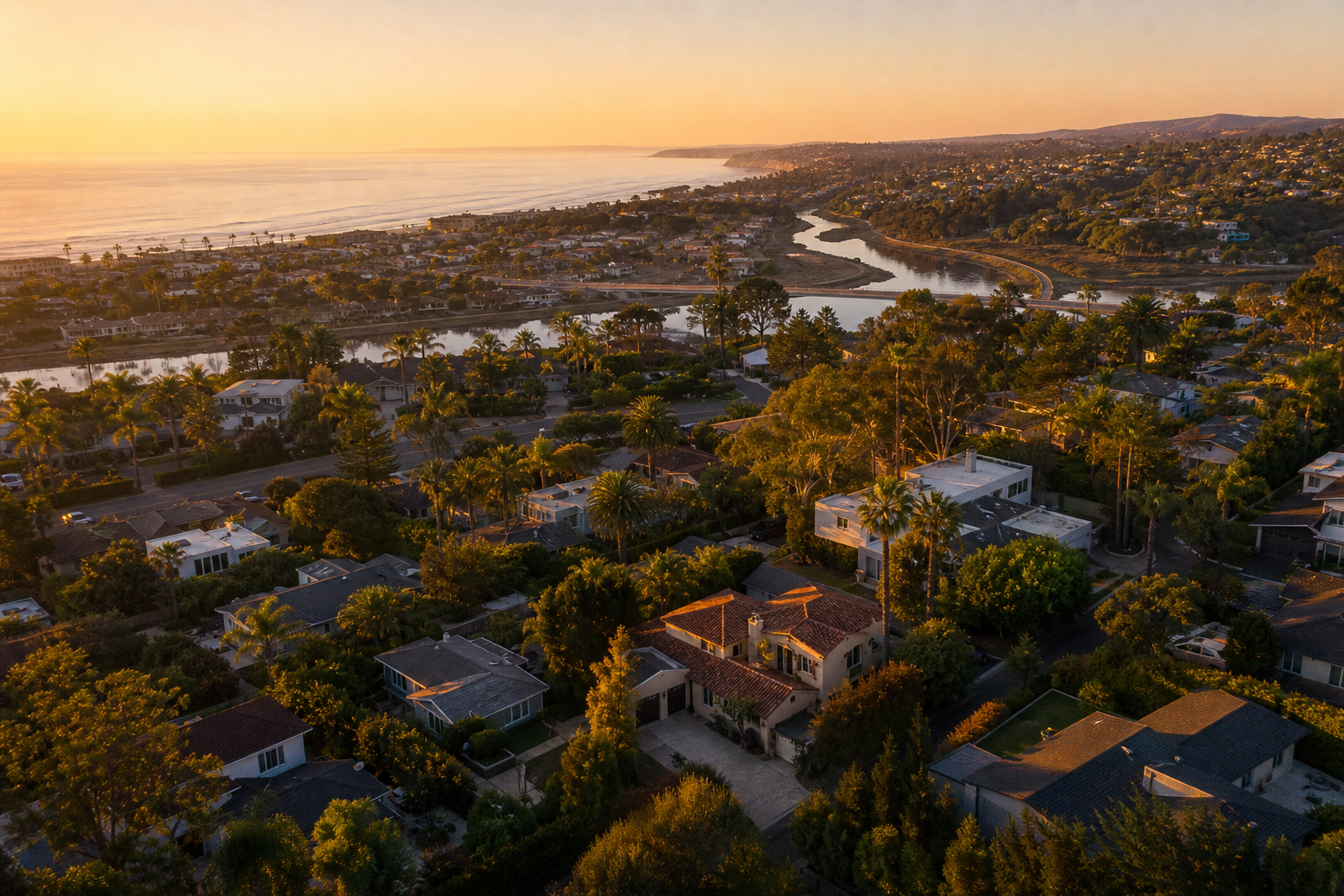
Probate sales in North County San Diego involve court oversight, unique timelines, and coordination among heirs, attorneys, and agents. A flexible, experienced approach, one tailored to each family’s situation, is the difference between a smooth process and a costly, drawn-out ordeal.
What makes probate sales in North County San Diego different from a standard home sale?
Probate sales involve court supervision, multiple decision-makers, and emotional complexity that a standard listing simply doesn’t. In North County San Diego, where median sale prices in areas like Encinitas sit around $2,200,000 according to recent Zillow market data, the financial stakes are high, and so is the need for an agent who knows how to navigate the process without adding stress to a family already dealing with loss.
How the California Probate Process Works for Real Estate
When a property owner dies, their real estate typically can’t just be sold. If there’s no living trust or joint tenancy, the estate usually has to go through California probate court before the property can transfer to new owners. That process runs through the San Diego Superior Court, and it adds layers that don’t exist in a typical transaction.
Here’s what families in North County San Diego generally encounter:
- Appointment of a personal representative. The court appoints an executor (if named in a will) or an administrator (if there’s no will) to manage the estate, including the real property.
- Court authorization to sell. Depending on the authority granted, the personal representative may need court confirmation before accepting an offer. Under the California Probate Code, the Independent Administration of Estates Act (IAEA) can allow sales without a court hearing if heirs consent, but full authority isn’t always granted.
- Property condition disclosures. The personal representative may have limited knowledge of the home’s history. California still requires a Transfer Disclosure Statement and related disclosures, but the representative signs based on actual knowledge, which is often incomplete.
- Overbid process. When court confirmation IS required, the accepted offer is published and other buyers can overbid at the hearing. This is a step most buyers and agents have never encountered, and it changes how you price and negotiate.
- Extended timelines. A standard escrow in North County San Diego might close in 30 days. A probate sale requiring court confirmation can take 4 to 6 months or longer, depending on court scheduling and estate complexity.
Every probate situation is different. Some estates have clean title, cooperative heirs, and a smoothly granted IAEA authority. Others involve disputes, unknown liens, deferred maintenance, or properties that have sat vacant for years. That’s why I handle probate sales differently from a standard listing, there’s no one-size-fits-all playbook here.
Trust Sales: A Faster Path, But Still Complex
If the deceased held their property in a living trust, the sale typically bypasses probate court entirely. The successor trustee steps in and can sell the property much like a standard transaction. That said, trust sales still require careful coordination: verifying the trust document, confirming the trustee’s authority, and working through any co-trustee or beneficiary dynamics.
The California Department of Real Estate and the California Probate Code’s trust provisions govern how trustees manage and dispose of trust assets. I work closely with the estate attorney throughout, they handle the legal side, I handle the real estate side, and together we keep the process moving.
What Families Need From Their Agent in a Probate Sale
I’ve worked with a lot of families navigating this process in North County San Diego, and what I hear most often isn’t “get us the highest price”, though that matters. It’s “make this as simple as possible” and “tell us what to expect.”
Here’s what a good probate agent actually does for you:
- Coordinates with the estate attorney. The attorney manages the legal process; the agent manages the real estate transaction. When those two are out of sync, deals fall apart. I stay in close contact with counsel from day one.
- Prices the property correctly from the start. Probate properties often carry deferred maintenance, dated finishes, or condition uncertainty. Pricing too high, hoping to negotiate down, backfires badly when a court confirmation hearing is involved. In my experience working with sellers across Encinitas, Carlsbad, and Escondido, the right price from the start protects the estate and reduces court-related delays.
- Prepares buyers for the process. Buyers need to understand the timeline, the overbid risk, and what “as-is” really means in a probate context. I walk every buyer’s agent through the details upfront so there are no surprises at escrow.
- Manages the property and logistics. Vacant probate properties need attention, utilities, security, basic upkeep. I help families coordinate what needs to happen before listing, including connections to estate sale services, cleanout crews, and contractors when light repairs make sense.
- Stays flexible when the situation changes. Heirs disagree. Court dates move. Title issues surface. A probate sale rewards patience and adaptability, not a rigid process.
The North County San Diego Market Context
Understanding current market conditions matters even in a probate sale. According to recent Zillow market data, the Encinitas area is seeing a median of 49 days on market, with 122 active listings and 60 new listings added in the past 30 days. That’s a market with real buyer competition, but also meaningful inventory, which means pricing and presentation still drive outcomes.
The California Association of REALTORS® tracks county-level sales activity and can give you a broader picture of San Diego County trends. The San Diego Association of REALTORS® (SDAR) publishes local market reports that I use to benchmark where a probate property sits relative to current comps.
For a probate property that needs work, the gap between list price and net proceeds can be significant. That’s a conversation worth having before you ever accept an offer, and it’s exactly the kind of analysis I provide as part of my initial consultation with the estate.
| Sale Type | Court Involvement | Typical Timeline | Key Complexity |
|---|---|---|---|
| Standard Sale | None | 30–45 days escrow | Seller condition knowledge, standard disclosures |
| Trust Sale | None (typically) | 30–60 days escrow | Trustee authority verification, beneficiary coordination |
| Probate Sale (IAEA Full Authority) | Minimal | 45–90 days | Heir consent, limited disclosure knowledge |
| Probate Sale (Court Confirmation Required) | Significant | 4–6+ months | Overbid process, court scheduling, pricing strategy |
These timelines are general estimates, your situation depends on court scheduling, estate complexity, and how quickly heirs and counsel can align. I’ll give you a realistic picture specific to your property and estate when we talk.
Common Pitfalls in Probate Sales (and How to Avoid Them)
I’ve seen probate sales go sideways in ways that cost families real money and real time. The most common issues:
- Hiring an agent unfamiliar with the court confirmation process. If your agent has never navigated a San Diego probate hearing, they may underprice, overprice, or accept an offer that can’t survive the overbid process. The National Association of REALTORS® and the California Association of REALTORS® both offer probate-related education, but there’s no substitute for having done it.
- Skipping the title search early. Probate properties sometimes carry old liens, unpaid property taxes, or title clouds that surface late in escrow. The San Diego County Assessor/Recorder/County Clerk is the place to start for recorded documents, and I always recommend getting a preliminary title report ordered early.
- Ignoring property tax implications. When a property transfers through an estate, it may trigger a reassessment under California’s property tax rules, though certain parent-child and grandparent-grandchild transfers may qualify for exclusions under Proposition 19. The San Diego County Treasurer-Tax Collector handles property tax accounts, and the estate attorney should address reassessment exposure before closing.
- Moving too fast on repairs. Some families want to renovate before listing to maximize price. That can make sense, but in a probate context it adds time, cost, and risk. I help families weigh the actual return on any pre-sale work, sometimes a well-priced as-is sale nets more than a renovated listing after you factor in carrying costs.
- Not communicating with all heirs. Disagreements among heirs are the single biggest cause of probate sale delays. Getting everyone aligned early, on pricing, timing, and process, saves months. I make it a point to understand who the decision-makers are before we go to market.
If you’re working through a probate or trust sale and want to understand how these issues apply to your specific property, I’d encourage you to also read my deeper look at how to choose the right listing agent for a probate or trust sale in North County San Diego.
Readers who want a side-by-side comparison of what to look for in an agent can also find that in my expert comparison guide for probate and trust sale agents in North County San Diego.
The bottom line: probate sales reward preparation, patience, and an agent who’s done this before. If you’re a personal representative or trustee trying to figure out your next step, the best thing you can do is get a realistic picture of where the property stands, market value, condition, title, and timeline, before you commit to any course of action.
To see what other families have said about working through this process with me, I’d invite you to read my reviews on Google and Zillow.
Frequently Asked Questions: Probate Sales in North County San Diego
Do all probate properties in California have to go through court confirmation before selling?
No. Under California’s Independent Administration of Estates Act, a personal representative granted full authority can sell real property without a court confirmation hearing, as long as proper notice is given to heirs and no objection is filed. When only limited authority is granted, or when heirs object, court confirmation is required, and that’s when the overbid process comes into play. The estate attorney determines which applies to your situation.
How long does a probate sale typically take in San Diego County?
It depends on whether court confirmation is required. A trust sale or a probate with full IAEA authority can close in 45 to 90 days, similar to a standard transaction. A probate requiring court confirmation typically runs 4 to 6 months from listing to close, sometimes longer if the San Diego Superior Court’s calendar is backed up or if estate issues arise. I give families a realistic timeline estimate at the outset based on their specific situation.
Can a probate property be sold as-is in California?
Yes, and it frequently is. Personal representatives often have limited knowledge of the property’s history, so selling as-is protects the estate from warranty claims. California still requires disclosures based on actual knowledge, and buyers are entitled to conduct inspections. Pricing an as-is probate property correctly is critical, it needs to reflect condition honestly while still attracting qualified buyers willing to take on the property.
What happens if multiple buyers want a probate property that requires court confirmation?
When court confirmation is required, the accepted offer becomes the opening bid at a court hearing. Other qualified buyers can appear and overbid, the minimum overbid is set by California Probate Code formula. The property ultimately sells to the highest bidder at the hearing. This is why working with an agent who understands how to prepare buyers for this process matters: a buyer who doesn’t know about the overbid risk may walk away frustrated, or worse, be outbid on a property they thought they’d already won.
Does a probate sale in North County San Diego trigger a property tax reassessment?
It can. When real property transfers through an estate, California’s rules under Proposition 19, which took effect in 2021, significantly narrowed the parent-child exclusion from reassessment. Whether a transfer qualifies for an exclusion depends on the relationship between the decedent and the heir, whether the property is the heir’s primary residence, and the property’s assessed versus market value. This is a question for the estate attorney and a tax advisor, not something to assume. The San Diego County Assessor’s office can provide information on how to apply for any applicable exclusion.
The Right Approach Makes All the Difference
Probate sales in North County San Diego aren’t just complicated transactions, they’re transactions that happen during some of the hardest moments in a family’s life. The right agent brings process knowledge, market expertise, and genuine flexibility to whatever the estate needs, whether that’s a fast as-is sale or a carefully staged listing designed to maximize value.
If you’re a personal representative, trustee, or family member trying to figure out how to handle a property in Encinitas, Carlsbad, Escondido, Oceanside, or anywhere else in North County San Diego, I’m happy to walk through your situation at no cost or obligation. Request a free consultation here and let’s talk through what makes sense for your family.
Equal Housing Opportunity. Matthew Sorensen is a Broker Associate licensed by the California Department of Real Estate. This article is provided for general informational purposes only and does not constitute legal, tax, or financial advice. Probate and trust sale processes vary by estate, consult your estate attorney, tax advisor, and escrow/closing officer to confirm how the rules apply to your specific situation.