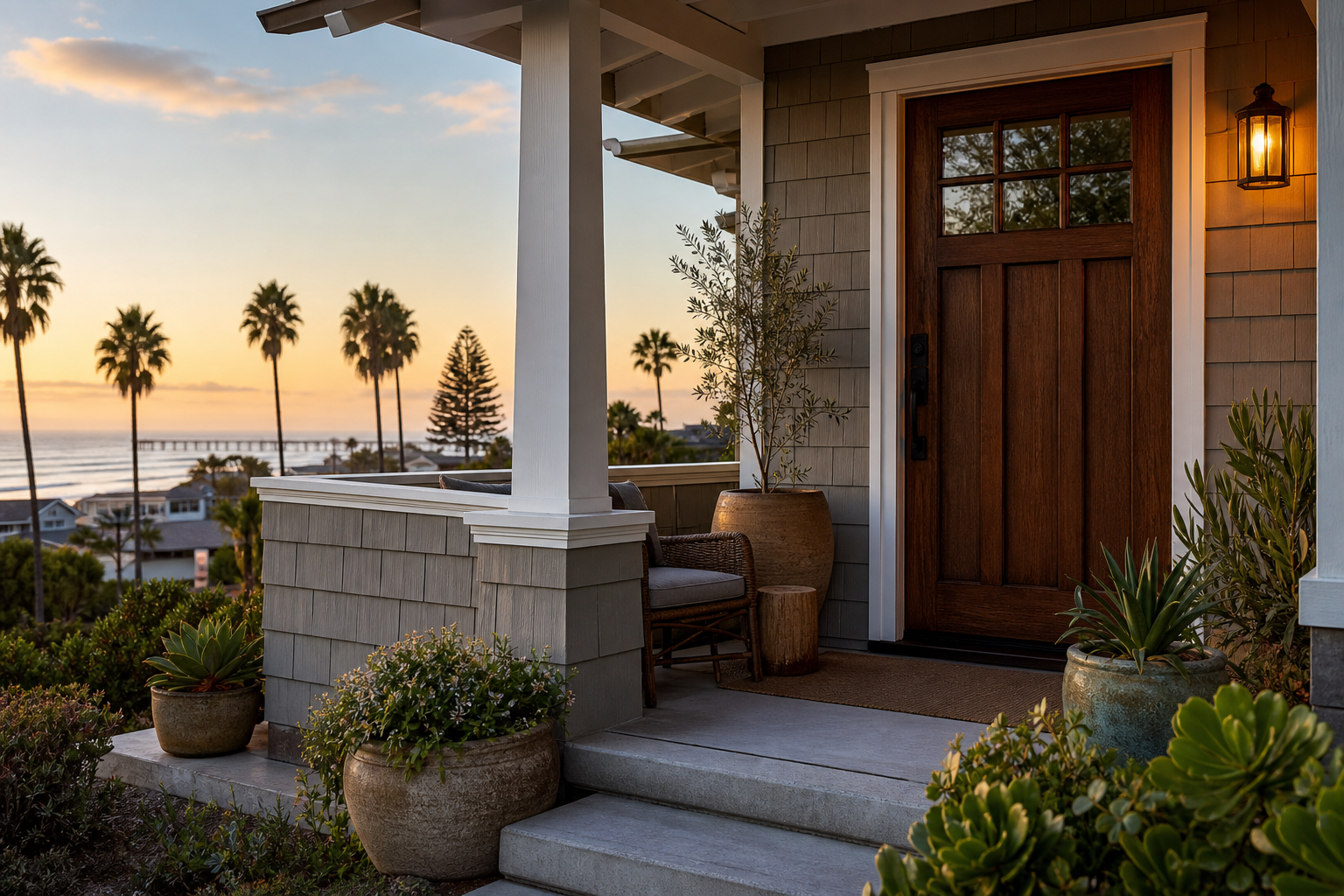
Oceanside’s beachfront resort redevelopment, anchored by Mission Pacific and The Seabird, has strengthened the city’s property tax base and repositioned the downtown as a coastal destination. Sellers near the 92054 coastal corridor can frame their homes as resort-adjacent, in a market where the median sale price is $870,000 and homes are moving in about 24 days.
How is Oceanside’s beach resort redevelopment affecting local home values?
Oceanside’s downtown beachfront transformation, anchored by the 2021 openings of Mission Pacific Hotel and The Seabird Resort, has materially strengthened the city’s property tax base and repositioned the coastal corridor as an upscale destination. A February 2026 economic impact assessment estimates total property value within Oceanside’s beach economic areas at approximately $6.28 billion, with those beachfront and adjacent commercial zones generating more than $16.2 million per year in property-tax revenue. For sellers near the downtown core, that shift in perception and fiscal weight is a real tailwind.
Key Takeaways
- Oceanside’s median sale price is $870,000 as of September 2026, with homes selling in a median of 24 days, the fastest pace among major North County San Diego markets.
- A February 2026 economic impact assessment values property within Oceanside’s beach economic areas at approximately $6.28 billion, with beachfront and adjacent zones generating more than $16.2 million in annual property-tax revenue.
- Mission Pacific Hotel and The Seabird Resort opened in May 2021, and the Brick Hotel followed in June 2022, collectively converting the pier-adjacent blocks from transient-heavy parking lots into a walkable resort destination.
- Oceanside does not impose a city transfer tax; sellers pay only the San Diego County documentary transfer tax at the statutory rate under California Revenue and Taxation Code §11911.
- Sellers near the 92054 coastal corridor can credibly position their homes as resort-adjacent, but the specific value impact depends on proximity, property condition, and how the listing is framed to the right buyer pool.
What did Oceanside’s downtown redevelopment actually build, and why does it matter for sellers?
The short answer: it replaced a gap in the city’s coastal identity with something buyers will pay to be near.
Before 2021, the blocks fronting the Oceanside Pier were anchored largely by surface parking lots and aging hospitality. That changed fast. The Coast News Group reported that Mission Pacific Hotel opened May 19, 2021, followed by The Seabird Resort on May 27, 2021, together forming a new four-star beachfront resort complex at the pier. Then in June 2022, the Brick Hotel opened in downtown Oceanside, converting a historic building into boutique lodging with food-and-beverage venues that added foot traffic to the walkable core.
By mid-2024, regional coverage was describing a broader shift. A San Diego Reader feature characterized Oceanside as “on the upswing,” noting that the formerly transient-heavy lots across from the pier were now occupied by Mission Pacific and The Seabird, and framing the city as a “hip” coastal destination with upgraded hospitality and dining.
For sellers, that narrative shift is a marketing asset. A home or condo within walking distance of the pier, the resort complex, and the growing restaurant corridor is no longer just “near the beach.” It’s resort-adjacent, and that’s a positioning argument you can make to buyers who would otherwise be cross-shopping Encinitas or Carlsbad at significantly higher price points.
The fiscal case for why Oceanside will keep investing in this corridor
One of the strongest long-term arguments for owning near Oceanside’s downtown is that the city has a direct financial incentive to protect and grow it.
The February 2026 coastal resilience economic impact assessment puts the stakes in concrete terms: beachfront parcels and the directly adjacent development generate about $10.1 million in annual property-tax revenue, while the commercial core and surrounding mixed-use neighborhoods add another $6.1 million. That’s more than $16.2 million per year flowing from this concentrated zone into city services and infrastructure.
The same study models a scenario where a 10% drop in annual beach visitation, due to erosion and reduced access, could translate into roughly $250 million in annual economic losses. That’s a scenario analysis, not a current condition, but the math makes the city’s motivation to invest in coastal resilience and downtown vitality very clear. Oceanside’s leadership has been explicitly tying resort development to fiscal strategy for years: a projection from around 2019 estimated the resort complex would generate $30.7 million in city revenue over its first 15 years, according to the Los Angeles Times.
When a city’s tax base depends this heavily on a specific corridor staying attractive, sellers in that corridor benefit from that institutional commitment. That’s a durable tailwind, not a trend that reverses when a new hotel stops being news.
What does the current Oceanside market look like for sellers in 2026?
Recent local market data shows Oceanside’s median sale price at $870,000, with a median of 24 days on market and 487 homes sold in the trailing 90 days. With 373 active listings and 185 new listings in the last 30 days, there’s real inventory moving through the market at a pace that outstrips most of North County San Diego.
To put that in context, here’s how Oceanside compares to other markets I work across North County:
| Area | Median Sale Price | Median Days on Market |
|---|---|---|
| Encinitas | $2,203,000 | 45 |
| Carlsbad | $1,290,000 | 38 |
| San Marcos | $986,000 | 46 |
| Del Mar | $3,900,000 | 57 |
| Escondido | $866,000 | 29 |
| Fallbrook | $895,000 | 49 |
| Oceanside | $872,500 | 21 |
| Solana Beach | $1,950,000 | 45 |
Oceanside’s 21-day median is the fastest in this group. That pace matters for sellers because it signals genuine buyer demand, not just listed inventory sitting. And at a median well below Carlsbad and Encinitas, Oceanside still offers coastal California living at a relative value, which is exactly the story that draws buyers who’ve been priced out of the markets to the south.
Keep in mind that these are area-level medians. Your specific home’s value depends on its condition, street, proximity to the coast, and how it’s priced from day one. In my experience working with sellers in this market, pricing right from the start is what separates a 21-day sale from a listing that lingers. If you’d like to know where your property falls within this range, a free home valuation is the right first step.
What sellers near the coastal corridor should know about transaction costs
One piece of the selling equation worth understanding early: Oceanside does not impose a city transfer tax. When your deed records, you’ll pay only the San Diego County documentary transfer tax, calculated at $0.55 per $500 of real property value under California Revenue and Taxation Code §11911. That’s a meaningful difference from cities that layer on their own municipal transfer tax on top of the county rate.
Beyond the transfer tax, a typical Oceanside sale involves escrow fees, title insurance, prorated property taxes, and any HOA transfer costs if your property is in an association. These costs are negotiable between buyer and seller in most cases, and who pays what is spelled out in your purchase contract. Your escrow officer handles the actual settlement and disbursement of funds at closing, so they’ll give you a precise accounting of what’s owed before you sign. I walk every seller I work with through a realistic net-sheet before we list, so there are no surprises at the table.
For a deeper look at what sellers in this market need to prepare for, my post on the Oceanside downtown revival and what sellers need to know covers the positioning side in more detail. And if you’re thinking about pricing strategy specifically, how to price a home to sell fast in Oceanside walks through the mechanics of getting it right from day one.
If you’re weighing whether now is the right time to list, the only way to know your number is to run it with someone who knows this market. Every situation is different, and the resort-driven repositioning of downtown Oceanside is one factor among several that shape what your specific property is worth today.
Before you read the FAQ below, I’d invite you to see what other buyers and sellers have said about working with me on Google and Zillow.
FAQ
Is living near Mission Pacific and The Seabird worth a pricing premium if I’m selling my condo or townhome?
Proximity to the resort corridor is a real marketing advantage, but it doesn’t produce an automatic premium independent of the property itself. Buyers drawn to resort-adjacent living in 92054 are typically comparing walkability, views, condition, and HOA costs alongside location, so a well-priced, well-presented unit near the pier will outperform a dated one every time. The resort’s presence expands your buyer pool and strengthens your lifestyle narrative, and that translates into faster, stronger offers when the home is priced correctly from the start.
Are more downtown hotels and mixed-use projects going to push home values up or level them off?
Continued investment in downtown Oceanside generally supports residential values by deepening the city’s appeal as a destination and reinforcing the fiscal case for infrastructure maintenance. The 2026 coastal resilience economic impact assessment shows the beachfront and adjacent commercial zones already generating more than $16.2 million in annual property-tax revenue, giving the city strong incentive to protect that base. That said, additional hotel and mixed-use supply can also shift the competitive landscape for short-term rental income, so investors should factor that into their analysis separately from owner-occupant value.
What does the San Diego County documentary transfer tax mean for me if I sell a house in Oceanside?
The San Diego County documentary transfer tax is calculated at $0.55 per $500 of real property value under California Revenue and Taxation Code §11911, and it’s collected when the deed records. Oceanside does not add a city-level transfer tax on top of the county rate, which keeps this cost lower than in cities that impose their own municipal tax. Who actually pays it, buyer or seller, is negotiable and should be spelled out in your purchase contract; your escrow officer will confirm the exact amount before closing.
Is Oceanside really becoming a “hip” beach town, and does that translate into higher resale value?
The repositioning is real and documented. A 2024 San Diego Reader feature described Oceanside as “on the upswing” and characterized it as a “hip” coastal destination with upgraded hospitality and dining, a shift that regional buyers have noticed. Whether that translates directly into higher resale value for your specific property depends on location within the city, property type, and condition. Homes and condos closest to the downtown core and pier tend to benefit most from the destination narrative, while properties farther inland see the effect more indirectly through overall city desirability.
If I list my home near downtown Oceanside now, am I competing with resort-style condos or hotel inventory?
Residential listings and hotel rooms serve different buyer motivations, so they don’t directly compete the way two condos on the same street do. Buyers purchasing near downtown Oceanside are looking for permanent or second-home ownership, not nightly lodging, and the resort presence actually helps your listing by validating the lifestyle you’re selling. Where you’ll see genuine competition is from other residential listings in the same ZIP code and price range, which is why understanding active inventory and days on market in 92054 specifically, rather than citywide averages, matters when you’re deciding how to price and time your listing.
Equal Housing Opportunity. Matthew Sorensen is a Broker Associate licensed by the California Department of Real Estate. This article is general information only and is not legal, tax, or financial advice. Verify your own costs and transaction details with your escrow officer, tax advisor, or lender.
- About Matt Sorensen
- Contact Matt

Matt Sorensen is a Broker Associate with Coldwell Banker Realty and a licensed real estate professional since 2000, serving San Marcos and North County San Diego. He specializes in probate and trust home sales, helping trustees and families navigate pricing, disclosures, timelines, and vendor coordination with clear communication and steady guidance. CA DRE Lic. #01293787