Category: Uncategorized

  • Carlsbad vs San Marcos Home Prices in North County

    Carlsbad vs San Marcos Home Prices in North County

    Carlsbad is the premium coastal choice, with a recent local median sale price of $1,510,000, while San Marcos is the inland, value-oriented option. The right fit depends on your budget, property type, and commute. Compare the same kind of home in both cities before deciding.

    Carlsbad vs San Marcos Home Prices in North County

    Carlsbad vs San Marcos, which one fits your budget?

    In the Carlsbad vs San Marcos decision, Carlsbad is the premium coastal market and San Marcos is the more value-oriented inland one. Recent local market data puts Carlsbad’s median sale price at $1,510,000, and that figure is the benchmark every San Marcos search gets measured against. Which city fits you depends on what you want your monthly payment to buy: a coastal address or more house for the money.

    Key Takeaways

    • Recent local market data (trailing 90 days, October 2026) shows a Carlsbad median sale price of $1,510,000.
    • Carlsbad homes took a median of 37 days to sell, with 238 active listings and 314 homes sold over the same period.
    • Oceanside, Escondido, and Fallbrook all post medians under $910,000, which shows how far Carlsbad sits above its North County neighbors.
    • Carlsbad suits Interstate 5 coastal commutes, while San Marcos connects inland through State Route 78 and the Sprinter rail corridor.
    • The only fair comparison is the same property type, the same sale period, and the same geography in both cities.

    What does the data say about Carlsbad vs San Marcos pricing?

    Carlsbad is the expensive end of the North County range. Recent local market data shows a median sale price of $1,510,000, a median of 37 days on market, 238 active listings, and 314 homes sold in roughly the last 90 days. These are area-level medians, so an individual home’s value depends on its condition, street, build year, and timing.

    Here’s the area snapshot I use to show clients where Carlsbad sits among North County markets:

    AreaMedian Sale PriceMedian Days on Market
    Carlsbad$1,510,00037
    Del Mar$4,100,00046
    Escondido$899,00030
    Fallbrook$905,50048
    Oceanside$867,50026

    Source: recent local market data, trailing ~90 days, as of October 2026. You can pull ZIP-level reports yourself, including Carlsbad’s 92009, from the North San Diego County REALTORS® market statistics, which draw on CRMLS data.

    How much more expensive is Carlsbad?

    Carlsbad’s median sits roughly $600,000 above the Escondido and Oceanside medians in the table. Del Mar is the only city here that runs higher. San Marcos is an inland city, so its pricing follows the inland pattern more than the coastal one.

    I won’t hand you a single San Marcos number to subtract from $1,510,000, though. A citywide median blends condos, townhomes, and detached houses of very different sizes. The honest comparison is detached against detached, or attached against attached, over the same sale period. That’s the analysis I build for clients, and it usually changes the picture once you filter by property type.

    Are homes selling faster in Carlsbad or San Marcos?

    Carlsbad’s 37-day median is slower than Oceanside (26 days) and Escondido (30 days) in the same data. Higher price points tend to take longer to find the right buyer, so that isn’t a sign of a weak market.

    With 238 active listings against 314 sales over about 90 days, Carlsbad holds a little over two months of inventory at the recent sales pace. That gives you room to compare homes without feeling rushed, but well-priced homes still move. A San Marcos search has its own pace, and it varies by price tier.

    How do lifestyle and commute differ between Carlsbad and San Marcos?

    Carlsbad is a coastal city built around beaches, ocean access, and the Interstate 5 corridor. San Marcos is an inland city with hills, parks, and California State University San Marcos. Your daily routine matters more than the label on the city.

    What does the premium in Carlsbad actually buy?

    You’re paying for location. Buyers generally pay more for west-of-I-5 and near-coast neighborhoods, where beaches and coastal parks are part of the everyday routine. Inland Carlsbad pricing differs from near-coast pricing, so “Carlsbad” is not one price. Two homes with the same square footage can sit hundreds of thousands of dollars apart depending on which side of the freeway they’re on.

    If you’ll use the coast weekly, that premium can be worth paying. If you’d visit the beach a few times a year, it’s worth asking whether the same budget buys more of what you use daily somewhere else.

    What does San Marcos offer for the money?

    San Marcos is where many buyers go to stretch a budget while staying in North County. The neighborhood choices vary a lot depending on how close you are to the university, Old California Restaurant Row, the newer master-planned areas, and the major roads like State Route 78.

    Because those pockets differ in age, lot size, and style, I look at them one at a time rather than treating San Marcos as one market. Many have homeowners association dues, and some properties carry special tax assessments such as Mello-Roos. Confirm those on any property you consider, since they change your true monthly cost.

    Which city is better for commuting?

    It depends on where you’re going. Carlsbad is generally better positioned for commuters using the Interstate 5 coastal corridor toward Oceanside and the rest of coastal North County. San Marcos connects more directly to inland North County through State Route 78 and the Sprinter rail corridor.

    I won’t quote drive times without a defined start, destination, and departure hour. Test your own route at your own commute time before you make an offer.

    How do you decide between Carlsbad and San Marcos?

    Start with the monthly payment you’re comfortable with, then see what each city buys at that number. Doing that comparison with real listings usually settles the Carlsbad vs San Marcos question faster than any median.

    1. Set your payment, not just your price. Talk to your lender about what your numbers support, since rates, taxes, and dues all affect it.
    2. Pick one property type. Compare detached homes to detached homes, or condos to condos, in both cities.
    3. List your non-negotiables. Coastal access, commute route, lot size, and age of the home rarely line up in one place at one price.
    4. Tour both on a weekday. Visit at your actual commute hour to see how each location works in real life.
    5. Check the big-ticket systems. I always tell first-time buyers to check the age and condition of the HVAC system before making an offer, because it’s one of the most expensive things to replace.

    Carlsbad vs San Marcos is rarely about which city is better. It’s about which set of trade-offs you’d rather live with. I walk my clients through exactly this comparison, using current listings in both cities side by side. If you’re also thinking about selling a home to make the move, my breakdown on how to price your home correctly in Carlsbad, Encinitas, Oceanside, Vista, and San Marcos covers the other side of the transaction.

    After 25 years working North County, I’ve seen buyers start out set on Carlsbad and end up happily in San Marcos, and the reverse. Your specific answer depends on your budget, your timeline, and the exact homes in front of you, and that’s where a local market analysis comes in.

    Want to hear what past clients say about working with me? You can read my reviews on Google and Zillow.

    FAQ

    Is Carlsbad or San Marcos cheaper for buying a home in 2026?

    San Marcos is the more value-oriented market, while recent local data shows Carlsbad’s median sale price at $1,510,000. The exact gap depends on property type, size, and condition, since citywide medians mix very different homes. I can pull a same-type comparison for your price range.

    Are homes selling faster in Carlsbad or San Marcos?

    Carlsbad’s median is 37 days on market in recent local data, slower than Oceanside at 26 days and Escondido at 30 days. San Marcos timing varies by price tier and property type, so I check current sold data in your range before advising you on offer strategy.

    Which city has more homes for sale?

    Carlsbad has 238 active listings in recent local market data, alongside 314 homes sold over roughly 90 days. San Marcos inventory shifts week to week and by property type, so the most useful number is how many homes in your price range and style are available today. I can send you that list.

    Is Carlsbad worth the premium for beach access and lifestyle?

    It’s worth it if you’ll use the coast and the Interstate 5 corridor regularly. The premium is largest in west-of-I-5 and near-coast neighborhoods, so a Carlsbad home farther from the water prices differently. Run the monthly payment with your lender before you decide.

    Which city is better for commuting?

    Carlsbad works best for Interstate 5 coastal commutes, and San Marcos works best for inland North County trips along State Route 78 and the Sprinter rail corridor. Test your actual route at your actual commute hour, because travel times depend on your origin, destination, and schedule.

    The Carlsbad vs San Marcos choice gets much clearer once you see real homes at your budget side by side. I’d be glad to put that comparison together for you, with current listings, same-type pricing, and your commute in mind. Request your free home valuation or book a consultation and we’ll start there.

    About Matthew Sorensen

    Matthew Sorensen is a REALTOR® with Coldwell Banker Realty who has served the North County San Diego market for more than 25 years. He guides buyers and sellers with concierge-level service and deep experience buying, rehabbing, and managing homes.

    Coldwell Banker Realty · (858) 204-6288

    Equal Housing Opportunity. Matthew Sorensen, Broker Associate, regulated by the California Department of Real Estate. This article is general information, not legal, tax, or financial advice; confirm your own numbers with your escrow officer, tax advisor, or lender.


  • Inherited House: As-Is or Repair First?

    TL;DR: Usually, you should sell an inherited house as-is if the home needs broad, uncertain, or hard-to-manage work, you want a faster sale, or you do not have clear records for the property. You should consider targeted repairs first only when you can identify a short list of visible problems, get reliable bids, and confirm what work was actually done or still needs final signoff. For inherited property, the decision is not just about paint and flooring. It is also about records, taxes, and uncertainty. Your inherited basis is generally the home’s fair market value on the decedent’s date of death, and gain or loss is figured from amount realized minus adjusted basis IRS Pub. 523. California property tax guidance also states inherited property value must be established at the amount it would sell for in an arm’s-length transaction involving knowledgeable parties BOE Annotation 460.0014.

    Start with the real question: certainty or cleanup?

    If you inherited a house in Escondido, the practical question is not “Should every old house be fixed first?” It is: Can you confidently define the work, cost, and paperwork well enough for repairs to be worth the delay?

    Selling as-is often makes sense when you inherited a property with deferred maintenance, outdated systems, incomplete records, or possible tenant-related condition issues. California materials on habitability explain that serious issues in a rental context can include lack of effective weather protection, plumbing, gas, heating, or safe electrical service, and they recommend written documentation and inspection requests when serious defects are involved DRE Guidebook CA OAG Habitability Guide. Even if your inherited property is vacant now, those sources are still useful as a screening tool for major condition questions buyers may care about.

    That does not mean every defect must be repaired before sale. It means you should separate:

    • cosmetic items you can price around,
    • major condition issues that affect buyer confidence, and
    • uncertainties that need records or city verification.

    Also, inherited-home sellers should keep taxes in view. IRS guidance says the basis of an inherited home is generally the fair market value at the decedent’s death, or an alternate valuation date if properly chosen, and gain or loss is calculated from the amount realized minus adjusted basis IRS Pub. 523 IRS Pub. 523 (2024). That means large renovation spending is not automatically the smart move just because you hope for a higher price.

    When selling as-is is usually the better call

    Selling as-is is often the cleaner option if the house has multiple unknowns. Common examples include an inherited home with old roofing, stains, aged HVAC, unverified additions, or bathrooms and kitchens that may have been updated long ago without easy-to-find paperwork. Missing records are an uncertainty to investigate; they are not proof that work was illegal or unsafe.

    As-is can be sensible when:

    • you live out of area and cannot supervise work,
    • the estate wants a simpler timeline,
    • the house needs work in several systems at once,
    • you do not have reliable documentation for past improvements, or
    • you want buyers to make their own renovation choices.

    In those situations, your best move is often to gather information rather than start construction. Request copies of any appraisal used for estate or inheritance purposes, because IRS guidance says inherited basis is generally tied to fair market value at death IRS Pub. 523. If available, collect lease files, repair invoices, contractor receipts, utility information, and any inspection reports the family may have. California habitability guidance repeatedly emphasizes keeping written records, notices, photos, and inspection documents when condition questions exist CA OAG Habitability Guide DRE Guidebook.

    Hypothetical example: You inherit a 1970s Escondido house with worn flooring, a roof leak stain, and an enclosed patio that family members believe was done years ago. You have no final inspection card, no contractor receipts, and no clear scope for what is cosmetic versus structural. In that case, a focused as-is strategy may be safer than opening walls and starting projects whose cost and approval path you cannot define up front.

    When limited repairs may be worth doing first

    Repairs may be worth doing before listing if the work is narrow, visible, and manageable. Think trash-out, deep cleaning, landscaping cleanup, broken fixture replacement, minor drywall patching, or paint where the scope is obvious. The goal is not to “fully remodel.” The goal is to remove distractions that make buyers overestimate the unknown.

    What you should avoid is assuming that every dollar of repair spending will come back in price. The supplied tax sources do not support that claim, and IRS guidance distinguishes between basis, selling price, and gain or loss rather than promising financial return from repairs IRS Pub. 523 IRS Pub. 523 (2023).

    If you are considering repairs, compare three buckets:

    1. Cosmetic cleanup: low uncertainty, easier to control.
    2. Functional fixes: for example, plumbing leaks or nonworking fixtures, which may matter more to buyers.
    3. Permit-sensitive work: room conversions, electrical upgrades, water heater relocation, or larger remodel items.

    That third bucket deserves caution. Permit issuance is not the same as inspections or final signoff, and even final records should not be described as proof of code compliance, workmanship quality, or safety. If any prior work may have required permits, ask for the exact permit history and whether there are records of inspections and final approval from the relevant city authority. If you cannot verify, disclose the uncertainty and decide whether doing no further work is the cleaner path.

    For inherited rentals or recently occupied homes, California habitability materials can also help you spot issues serious enough to evaluate before listing, such as defective plumbing, electrical problems, weather intrusion, or inadequate sanitation CA OAG Habitability Guide DRE Guidebook. They do not tell you to remodel; they help you identify whether a “simple clean and sell” plan may overlook something larger.

    Records to request before you choose

    Before choosing as-is or repairs, build a file. For inherited homes, paperwork often saves more stress than rushing into upgrades.

    • Appraisal or valuation used around the date of death. IRS guidance says inherited basis is generally fair market value on the date of death, unless an alternate valuation date applies IRS Pub. 523.
    • Any estate tax return or related valuation documents, if one was filed, because the value listed there may affect basis IRS Pub. 523.
    • Past repair invoices, contractor proposals, warranties, and appliance receipts.
    • Any leases, notices, repair requests, inspection notices, or photos if the property was tenant occupied. California habitability materials specifically recommend written notices, copies, and photos for condition issues CA OAG Habitability Guide DRE Guidebook.
    • Permit history and any available inspection/final records from the applicable city office for the exact property. If records are incomplete, treat that as unresolved information to verify.

    Once you have those documents, ask practical comparison questions: Which items are clearly cosmetic? Which items are active defects? Which are record problems rather than physical problems? Which repairs can be completed without opening larger issues? Those answers usually point to the right strategy.

    Practical checklist for inherited-home sellers

    • Order or locate the date-of-death appraisal and estate valuation documents.
    • Make a room-by-room list of visible defects with photos.
    • Separate cosmetic items from functional problems like leaks, electrical issues, or broken systems.
    • Gather receipts, warranties, and contractor records from family files.
    • Request permit history and ask whether inspection and final signoff records exist for prior work.
    • Do not assume a permit record proves quality, code compliance, or safety.
    • Do not assume missing records prove illegal work; treat missing information as something to verify.
    • Get a few repair bids only for clearly defined items, not open-ended remodels.
    • Compare the simplicity of selling as-is against the time and management burden of repairs.
    • Review gain-or-loss basics with your tax professional using inherited basis rules from IRS Publication 523 IRS Pub. 523.

    FAQs

    Do I have to repair everything before selling an inherited house?
    No. The better question is whether repairs are clearly scoped and worth the added time and uncertainty. For many inherited homes, selling as-is with good documentation is the simpler path.

    What if I cannot find permits or final records for old work?
    Do not treat missing records as proof of illegal work. Ask the relevant city authority for available permit history and whether inspection or final approval records exist. If you still cannot verify, disclose the uncertainty and decide whether avoiding new repair projects is wiser.

    How do taxes fit into the repair decision?
    IRS guidance says inherited basis is generally the home’s fair market value on the decedent’s date of death, and gain or loss is figured by subtracting adjusted basis from amount realized IRS Pub. 523. That is why inherited sellers should collect valuation records before spending heavily on upgrades.

    Need a practical sale plan?

    If you are deciding whether to sell your inherited Escondido house as-is or make repairs first, start with a property-specific review of condition, records, and likely buyer questions. For a practical next step, visit Matthew J. Sorensen.

    Sources

  • Escondido vs Fallbrook for North County San Diego Buyers Who Want More Space

    Escondido vs Fallbrook for North County San Diego Buyers Who Want More Space

    Escondido offers more urban convenience, transit access, and a broader buyer pool, while Fallbrook delivers lower density, larger parcels, and a rural lifestyle. The better trade-off depends on your commute tolerance, lot-size priorities, and long-term resale goals.

    Which is better for buyers: Escondido vs Fallbrook in North County San Diego?

    The Escondido vs Fallbrook question comes up constantly among buyers who want more space without leaving North County. Escondido gives you suburban infrastructure, transit connections, and a larger resale pool. Fallbrook gives you lower density, more land, and a semi-rural lifestyle that’s harder to find anywhere else in the region. Neither is objectively better. The right answer depends on what you’re trading away and what you’re gaining, and that calculation is different for every buyer.

    Key Takeaways

    • Recent local market data shows a trailing-90-day median sale price of $883,000 in Escondido and $917,500 in Fallbrook, with Fallbrook homes sitting on the market slightly longer (39 days vs. 33 days).
    • The North San Diego County Association of REALTORS® reported North County-wide supply at 2.8 months and 35 days on market for September 2026, a market that still favors sellers in most price ranges.
    • ZIP-code-level data from the September 2026 NSDCAR report shows Escondido median prices ranging across its three ZIP codes (92025, 92026, 92027), so a single citywide number can mislead, the street and ZIP matter.
    • Fallbrook’s lower population density supports a higher likelihood of larger parcels, but lot size, zoning, water arrangements, and access must be verified property by property.
    • Escondido’s rail and bus access broadens its buyer pool at resale; Fallbrook’s rural-lifestyle appeal attracts a more targeted but narrower set of buyers.

    How do Escondido vs Fallbrook numbers actually compare on price and market pace?

    Let me put the numbers on the table first, because the price assumption buyers bring into this comparison often turns out to be wrong.

    Recent local market data (trailing 90 days, as of October 2026) shows Escondido’s area-wide median sale price at $883,000 and Fallbrook’s at $917,500. Fallbrook is slightly higher, not lower, than Escondido in this snapshot. Escondido homes are also moving faster, at a median of 33 days on market versus 39 days in Fallbrook.

    The North San Diego County Association of REALTORS® market report from September 4, 2026 adds ZIP-code precision. It lists median prices of $745,000 in 92025, $830,000 in 92026, and $786,000 in 92027 for Escondido’s three ZIP codes, and $875,000 in 92028 for the Fallbrook area. Those are materially different numbers within Escondido alone, which tells you that a single citywide median for either community can mislead. The street and ZIP code matter as much as the city name.

    For broader context, the most recent North County regional data puts the overall median at $835,000 with 35 days on market and 2.8 months of supply for September 2026. Both communities sit close to that regional figure, which means neither is dramatically cheaper or more expensive than North County as a whole at the entry level.

    Here’s the area comparison across the communities I work in:

    AreaMedian Sale PriceMedian Days on Market
    Encinitas$2,149,85743
    Carlsbad$1,527,50026
    Del Mar$4,000,00047
    Escondido$883,00033
    Fallbrook$917,50039
    Oceanside$856,00016
    Solana Beach$2,000,00044

    These are area-level medians from aggregated public listing data. An individual home’s value depends on condition, street, build year, and timing. If you’re evaluating a specific property in either community, the area median is a starting point, not a price tag.

    What are the real trade-offs when weighing Escondido vs Fallbrook?

    Commute: which community is easier to get out of?

    Escondido has a meaningful infrastructure advantage here. The SPRINTER light rail connects Escondido to Oceanside, where you can transfer to the COASTER for coastal and downtown San Diego service. That rail option doesn’t exist in Fallbrook, and it matters for buyers who want to leave a car at home some days.

    By car, both communities require real drive time to reach major San Diego employment centers. Fallbrook sits further north and west of Interstate 15, which is the main inland corridor. Drive times to downtown San Diego, Sorrento Mesa, or Kearny Mesa will differ substantially depending on your specific origin, destination, and whether you’re hitting peak-period traffic. I won’t publish a single number here because it would be misleading. What I will say is that buyers seriously considering Fallbrook should do a test drive during their actual commute window before they make an offer, not just check a mapping app at noon on a Tuesday.

    Escondido’s position along I-15 and Highway 78 makes it more central to North County employment. If your job is in Carlsbad, Vista, San Marcos, or anywhere along the 78 corridor, Escondido is likely the easier base.

    Lot size and lifestyle: what does Fallbrook actually offer?

    This is where Fallbrook earns its reputation. The California Department of Finance 2020 Census data puts Fallbrook CDP’s population density at approximately 1,839 people per square mile. That lower-density profile makes larger parcels, agricultural-adjacent land, and semi-rural settings more common than you’d find in most of Escondido.

    But I want to be precise here, because I’ve seen buyers assume “Fallbrook” automatically means a large lot. It doesn’t. Lot size, zoning, water source (well vs. municipal), access roads, and any agricultural-use restrictions vary property by property. The community’s character trends rural, but you still have to verify the specific parcel. Don’t assume, confirm.

    Escondido has its own range. Parts of the city feel like a classic inland suburb with standard residential lots. Other areas, particularly as you move toward the outskirts, can offer more land. But as a general comparison, Fallbrook’s unincorporated, lower-density footprint gives buyers a better chance of finding genuine acreage without leaving North County.

    If the Escondido vs Fallbrook question is really about finding more space in North County, I’d also point you toward Vista as another inland option worth considering, especially if you want suburban infrastructure with a lower price point than the coast.

    Resale: which community gives you a broader buyer pool?

    This is the question buyers often forget to ask, and it’s one I raise early in every buyer consultation.

    Escondido’s transit access, central I-15 position, and larger population base mean that when you eventually sell, you’re marketing to a wider set of buyers. That doesn’t guarantee faster appreciation. What it does mean is that your home is accessible to commuters who need rail options, families who want urban amenities nearby, and investors looking at rental demand near Palomar College and North County employment centers.

    Fallbrook attracts a more targeted buyer. That’s not a negative, a buyer who wants that lifestyle will pay for it. But the pool is narrower. Rural and semi-rural properties can also take longer to appraise and finance in some cases, which may affect your timeline at resale. The September 2026 data showing Fallbrook at 39 median days on market versus 33 for Escondido is consistent with that dynamic, though one data point isn’t a trend.

    The available data is insufficient to establish a reliable long-term appreciation advantage for either area. Anyone telling you one community will definitively outperform the other over a 10-year horizon is speculating. What I can tell you is that buyer-pool size and convenience are real factors in how quickly and at what price you’ll be able to sell.

    If you’re weighing the sell-before-you-buy sequence as part of this decision, the North County sell-before-buying considerations are worth reading before you commit to either community.

    Everyday convenience: services, shopping, and infrastructure

    Escondido is a city of roughly 150,000 people with a full range of retail, medical, and service infrastructure. You have immediate access to major grocery chains, hospitals, and the kind of everyday errands that don’t require planning.

    Fallbrook is different. The San Diego County Health and Human Services Agency’s 2023 demographic profile lists Fallbrook’s community-planning-area population at 35,593. That’s a smaller service base, and the commercial footprint reflects it. Fallbrook has a genuine small-town downtown with local restaurants and shops, but for major retail, medical specialists, or a wider range of services, you’re likely driving to Temecula, Oceanside, or elsewhere.

    For some buyers, that’s exactly what they want. For others, it’s a friction point they underestimate until they’re living it. I always encourage buyers to spend a weeknight and a weekend morning in any community they’re seriously considering. The commute test and the Saturday-errand test will tell you more than any data table.

    Your specific numbers on value, commute tolerance, and lifestyle fit depend on your situation. That’s where a direct conversation makes more sense than a blog post.


    If you’ve found this post useful, I’d appreciate you taking a moment to share your experience. You can read what other clients have said on Google or Zillow.

    Frequently Asked Questions

    Is Escondido or Fallbrook better for commuting to San Diego?

    Escondido has a clear infrastructure advantage for commuters, with SPRINTER light rail service connecting to Oceanside and the COASTER coastal line, plus direct I-15 and Highway 78 access to North County employment centers. Fallbrook requires a longer drive to reach those same rail connections, and commute times to downtown San Diego or major employment hubs vary significantly by destination and traffic window. Buyers considering Fallbrook should test their actual commute route during peak hours before committing.

    Which has larger lots, Escondido or Fallbrook?

    Fallbrook’s lower population density makes larger parcels and semi-rural settings more common than in most of Escondido, but lot size is property-specific, not guaranteed by community name. Zoning, water source, agricultural-use restrictions, and access roads all vary and must be verified for each individual property. Some areas of Escondido also offer larger lots, particularly toward the city’s outskirts.

    Is Fallbrook cheaper than Escondido for buying a house?

    Not necessarily. Recent local market data (trailing 90 days, as of October 2026) shows Fallbrook’s area-wide median sale price at $917,500, slightly above Escondido’s $883,000. The September 2026 NSDCAR ZIP-code-level report shows Escondido’s three ZIP codes ranging from $745,000 to $830,000, while the Fallbrook-area ZIP (92028) came in at $875,000. Price differences between specific streets, neighborhoods, and property types within each community can be more meaningful than the community-level comparison.

    Does Escondido have better resale value than Fallbrook?

    Escondido’s larger population base, transit access, and central North County position give it a broader buyer pool at resale, which can support liquidity and market time. Fallbrook attracts a more targeted buyer who values the rural lifestyle, which can work in your favor if conditions are right, but it narrows the field. The available data is not sufficient to establish a reliable long-term appreciation advantage for either community, and anyone claiming otherwise is speculating.

    Are there more investment and rental opportunities in Escondido or Fallbrook?

    Escondido generally offers stronger rental demand fundamentals, given its proximity to Palomar College, North County employment corridors, and transit access that appeals to a wider renter pool. Fallbrook can offer opportunities in agricultural or larger-parcel properties, but the rental market is narrower and more lifestyle-driven. Investment viability depends heavily on the specific property, price point, and your strategy, so running the numbers with someone who knows both markets is the right next step.


    The Escondido vs Fallbrook decision comes down to what you’re willing to trade. If commute convenience, infrastructure, and a broad resale pool matter most, Escondido is the stronger fit. If land, lower density, and a genuinely rural North County lifestyle are the priority, Fallbrook deserves a serious look. I’ve helped buyers work through this exact comparison for more than 25 years, and the right answer is always specific to the person, not the community name.

    Get a free home valuation or schedule a consultation to talk through which community fits your goals.

    About Matthew Sorensen

    Matthew Sorensen is a REALTOR® and Broker Associate with Coldwell Banker Realty who has served the North County San Diego market for more than 25 years, guiding buyers and sellers with concierge-level service and deep experience buying, rehabbing, and managing homes.

    Coldwell Banker Realty · (858) 204-6288

    Equal Housing Opportunity. Matthew Sorensen is a licensed Broker Associate regulated by the California Department of Real Estate. This article is general information only and does not constitute legal, tax, or financial advice. Confirm your specific numbers with your escrow officer, tax advisor, or lender.
  • Inherited Home Tax Questions

    TL;DR: Before deciding whether to keep or sell an inherited Encinitas home, verify whether the transfer may avoid all or part of a property-tax reassessment under Proposition 19. In general, inherited real property changes ownership for property-tax purposes and may be reassessed to current market value unless an exclusion applies. For a parent-child or qualifying grandparent-grandchild transfer on or after February 16, 2021, the home generally must have been the transferor’s principal residence, and the heir generally must make it their own principal residence within one year and timely file the needed claim forms and homeowners’ exemption paperwork. If those facts are not true, reassessment may apply. BOE Pub. 800-9; BOE Prop 19.

    Start with the reassessment question, not the sale question

    If you inherit a California home, the first issue is usually not “Should I keep it?” but “What property-tax basis will apply if I keep it?” California’s Board of Equalization explains that property is reassessed to current market value upon a change in ownership unless an exclusion applies, and inherited property is generally treated as a change in ownership as of the date of death, even if a later deed is recorded. BOE Change in Ownership FAQ; BOE Pub. 800-9.

    That means an heir deciding whether to keep or sell should verify these facts immediately:

    • Was the decedent actually using the property as a principal residence at death? BOE Pub. 800-9
    • Are you a child, or a qualifying grandchild in the limited grandparent-grandchild situation? BOE Pub. 800-9
    • Do you intend to occupy the home as your own principal residence within one year of the change in ownership? BOE Pub. 800-9; BOE Prop 19
    • Will you timely file the required forms with the county assessor? BOE Pub. 800-9

    If the inherited home will instead be a rental, vacation property, or second home, the exclusion generally does not apply in the same way described for a qualifying family home transfer. The BOE’s Prop 19 summary limits the family-home exclusion to a principal residence of the transferor that becomes or remains the principal residence of the transferee, subject to the applicable value limit. BOE Prop 19; BOE Pub. 800-9.

    What principal-residence facts should an heir verify?

    The most important factual question is whether the home qualifies as the transferor’s and transferee’s principal residence for the Prop 19 family-home exclusion. The BOE states that for transfers on or after February 16, 2021, the property must be the principal residence of the transferor and must become or continue as the principal residence of the transferee within one year of the change in ownership. BOE Pub. 800-9; BOE Prop 19.

    For your decision-making, request and review records that help confirm these points:

    • The latest tax bill showing assessed value and exemptions, including whether a homeowners’ exemption appears on the property. BOE Prop 58 FAQ; BOE Prop 19
    • The trust, will, transfer-on-death deed, or probate documents showing who inherited the property. BOE Pub. 800-9
    • Mailing-address history, utility statements, voter registration, DMV address, and similar occupancy records if principal-residence status may be questioned. The BOE notes principal-residence status can require evidence when an exemption was not already on file. BOE Prop 58 FAQ
    • The date of death, because reassessment analysis is tied to the date of change in ownership. BOE Change in Ownership FAQ; BOE Pub. 800-9

    Also verify whether more than one heir is taking title and who, if anyone, will actually occupy the home. Partial interests can matter because only the portion that changes ownership is subject to reappraisal unless an exclusion applies. BOE Change in Ownership FAQ.

    Hypothetical: A parent’s Encinitas house has a factored base-year value far below current market value. Two siblings inherit it. If neither moves in as a principal residence within the required period, they should expect the assessor to analyze the transfer as reassessable unless an exclusion applies. If one sibling plans to occupy it, the family should confirm title structure, occupancy timing, exemption filing, and claim filing before deciding to keep it as a shared asset. The exact tax outcome is property-specific and should be confirmed with the San Diego County Assessor based on the recorded transfer and filed claims. BOE Pub. 800-9; BOE Change in Ownership FAQ.

    What filing deadlines and forms should be checked before you decide?

    Heirs often focus on future use of the property and overlook filing requirements. The BOE explains that after a death, filers should complete BOE-502-D, Change in Ownership Statement—Death of a Real Property Owner. The same BOE publication also says that if a child or grandchild inherited qualifying property, the applicable exclusion claim form BOE-19-P or BOE-19-G should also be filed. BOE Pub. 800-9.

    The Prop 19 materials further state that for a family home, the heir generally must file for the homeowners’ exemption within one year of the transfer, and the exclusion claim must be filed within three years or before transfer to a third party. BOE Prop 19; BOE Pub. 800-9.

    Before choosing to keep the home, request:

    • A copy of any filed BOE-502-D
    • A copy of any filed BOE-19-P or BOE-19-G
    • Proof of homeowners’ exemption filing date
    • The assessor’s current assessed value and any pending reassessment notice

    If you are leaning toward selling, do not assume the filing question is irrelevant. The filing period rules still matter to whether relief may be available before a sale to a third party. BOE Prop 19; BOE Prop 58 FAQ.

    How the value limit can change the keep-versus-sell analysis

    Even where the family-home exclusion applies, the benefit is not unlimited. The BOE’s Prop 19 summary states that for a principal residence transfer, the value limit is the current taxable value plus $1,000,000, with biennial adjustment. BOE Prop 19. A tax advisory article in the provided materials notes that for transfers through February 15, 2027, the adjusted figure is $1,044,586. Weaver advisory.

    So the heir should verify two numbers before deciding to keep the property:

    1. The parent’s or transferor’s current factored base-year value on the assessment roll. BOE Prop 58 FAQ
    2. The property’s market value as of the date of death or transfer date used by the assessor for reassessment analysis. BOE Change in Ownership FAQ

    If market value is above the allowed threshold, the property may receive only a partial exclusion rather than full preservation of the old assessed value. BOE Prop 19; Weaver advisory.

    This is where a keep-or-sell decision becomes practical. If the home will be owner-occupied by an heir and appears to fit within the value limit, keeping it may preserve more favorable property-tax treatment. If no heir will occupy it as a principal residence, or if the numbers still point to substantial reassessment, selling may become the cleaner option. Those are planning questions, not assumptions—so get the assessed-value records and verify them first.

    Practical checklist before deciding to keep or sell

    • Confirm the date of death and whether title passed by trust, will, intestacy, or transfer-on-death deed. BOE Pub. 800-9
    • Get the latest property tax bill and confirm the current assessed value and any homeowners’ exemption. BOE Prop 58 FAQ
    • Verify whether the decedent used the home as a principal residence. BOE Pub. 800-9
    • Decide whether an heir will move in and use the home as a principal residence within one year. BOE Prop 19
    • Ask the assessor which forms are already on file: BOE-502-D, BOE-19-P or BOE-19-G, and homeowners’ exemption paperwork. BOE Pub. 800-9
    • Request the assessor’s explanation of any pending or completed reassessment and how market value was determined. BOE Change in Ownership FAQ
    • If multiple heirs are involved, verify who will hold title and who will occupy, because ownership percentages and exclusions can affect the tax result. BOE Change in Ownership FAQ
    • Before listing, confirm with your CPA or attorney how the property-tax decision fits with the broader estate and tax plan.

    FAQs

    Does inheriting a home automatically preserve the parent’s low property-tax base?
    No. The BOE states inherited property is generally a change in ownership and is subject to reassessment unless an exclusion applies. For the current family-home exclusion, the transferor’s and transferee’s principal-residence requirements and timely filings matter. BOE Change in Ownership FAQ; BOE Pub. 800-9.

    If I plan to rent the inherited house, can I still keep the old tax basis?
    The BOE Prop 19 framework for a family home requires the home to become or remain the transferee’s principal residence. If you will not occupy it as your principal residence, verify directly with the assessor, because the principal-residence exclusion generally will not fit that fact pattern. BOE Prop 19; BOE Pub. 800-9.

    What if I am unsure whether the homeowners’ exemption was on the property?
    Request the tax bill, assessor record, and exemption history. The BOE notes that exemption status and evidence of principal residence can matter, and if the exemption was not already in place, the assessor may require evidence that the property was the principal residence. BOE Prop 58 FAQ; BOE Prop 19.

    CTA

    If you are weighing whether to keep or sell an inherited Encinitas home, start with the reassessment facts and filing deadlines before making a listing decision. For help coordinating the real-estate side of that decision, visit Matthew J. Sorensen.

    Sources

  • What Encinitas Coastal Sellers Get Wrong Before Listing

    What Encinitas Coastal Sellers Get Wrong Before Listing

    Selling coastal property in Encinitas requires submarket-specific pricing, early disclosure preparation, Coastal Commission awareness, and marketing that accurately documents views and improvements. With a median sale price of $2,150,000 and 44 median days on market, preparation and local expertise drive results.

    Selling Coastal Property in Encinitas: Key Steps

    What does it take to successfully sell coastal property in Encinitas?

    Successfully selling coastal property in Encinitas means pricing to the specific submarket your home sits in, assembling disclosures and permit records before you list, and marketing view and access claims with documentation to back them up. Recent local market data shows a median sale price of $2,150,000 and a median of 44 days on market, but individual results hinge on preparation, accurate positioning, and knowing what buyers at this price point will scrutinize.

    Key Takeaways

    • Recent local market data shows the Encinitas median sale price at $2,150,000 with a median of 44 days on market, based on approximately 158 homes sold in the trailing 90 days as of October 2026.
    • “Encinitas” covers distinct submarkets, Cardiff-by-the-Sea, Old Encinitas, Leucadia, New Encinitas, and Olivenhain, and pricing comps must reflect the right one, not just the ZIP code.
    • Bluff-top and bluff-adjacent sellers should assemble geotechnical reports, Coastal Commission permits, and recorded deed restrictions before listing, not after a buyer’s inspection uncovers gaps.
    • California requires sellers of one-to-four unit residential properties to provide a Real Estate Transfer Disclosure Statement; homes built before 1978 carry an additional federal lead-based paint disclosure obligation.
    • Broker compensation is fully negotiable, no rate is standard, customary, or set by law, and any compensation offered to a buyer’s agent is a separate, optional decision made by the seller.

    Why does pricing coastal property in Encinitas require a submarket approach?

    Pricing coastal property in Encinitas on a ZIP-code average is one of the most common and costly mistakes I see sellers make. The 92024 ZIP code covers ocean-adjacent blocks in Cardiff-by-the-Sea, the village streets of Old Encinitas, the bungalow corridors of Leucadia, newer construction in New Encinitas, and the equestrian lots of Olivenhain. A median pulled across all of them tells you almost nothing about what your specific home is worth.

    The September 2026 North San Diego County REALTORS® MarketWatch report, sourced from CRMLS, shows an Encinitas 92024 figure of $1,979,000 with a 95.8% sale-to-list ratio and 35 days on market. Recent local market data from aggregated public listings puts the area median sale price at $2,150,000 over the trailing 90 days. Neither number tells you what a bluff-top home in Cardiff commands versus an inland home near El Camino Real, which is exactly why comp selection has to be property-specific.

    When I run a pricing analysis for a coastal property in Encinitas, I separate comps by coastal exposure, view corridor, lot usability, elevation, parking, and renovation level. The difference between a direct ocean-frontage home, an unobstructed ocean-view home, a partial-view home, and a proximity-to-the-beach home is not a rounding error, it can be hundreds of thousands of dollars. Marketing materials and appraisal support need to make those distinctions clearly and document them.

    For a deeper look at how to build a comp set that actually reflects your home’s position in the market, see Pricing Encinitas Coastal Homes Right From Day One.

    Here’s how Encinitas compares to other North County coastal and inland markets on recent data:

    Area Median Sale Price Median Days on Market
    Carlsbad $1,510,000 25
    San Marcos $991,500 41
    Del Mar $4,000,000 45
    Fallbrook $901,640 63
    Oceanside $857,000 24
    Solana Beach $2,050,000 44

    Encinitas sits in a premium tier alongside Solana Beach and well above the broader North County median, which means buyers at this price point arrive with high expectations and experienced representation. Your pricing has to be evidence-based from day one. In my experience, pricing right from the start beats chasing the market down, and in a market with 44 median days on market, an overpriced listing doesn’t get a second chance at a first impression.

    What disclosures and documents should I prepare before listing coastal property in Encinitas?

    Preparation is where coastal property sales are won or lost. The sellers who get to closing smoothly are almost always the ones who assembled their paperwork before the first showing, not after a buyer’s inspection report lands in their inbox.

    California Transfer Disclosure Statement

    California requires sellers of residential property consisting of one to four dwelling units to provide a Real Estate Transfer Disclosure Statement, as outlined by the California Department of Real Estate. This covers known property conditions and environmental hazards. Complete it early and thoroughly, known defects, past leaks, water intrusion, drainage issues, foundation or retaining-wall work, insurance claims, unpermitted improvements, and neighborhood nuisances all belong here. Waiting until a buyer’s inspection uncovers something puts you in a reactive position you don’t want to be in.

    Lead-based paint disclosure for pre-1978 homes

    A significant portion of Encinitas’s coastal housing stock predates 1978. If your home was built before that year, federal rules require you to disclose known lead-based paint or lead hazards, provide any available reports or records, give the buyer the required lead-warning information and pamphlet, and offer a lead inspection opportunity, typically 10 days, though it can be modified or waived in writing. Per the California Department of Public Health, this rule requires disclosure and an inspection opportunity; it does not require you to pay for an inspection or remediate lead paint. The full framework is detailed in the California DRE Reference Book. Locate any existing reports before you accept an offer.

    Coastal Commission and city permits

    This is the document category that surprises sellers most. For bluff-top and bluff-adjacent properties, the California Coastal Commission can impose permit conditions that prohibit development on a bluff face and require recorded notices about coastal hazards. Before you list, pull together available surveys, geotechnical reports, drainage studies, retaining-wall records, prior Coastal Commission and city permits, repair documentation, and any recorded deed restrictions.

    Don’t promise future construction rights, additions, decks, seawalls, grading, pools, or shoreline work, without documentation confirming they’re legally available. Coastal properties can be subject to shoreline hazards, bluff setbacks, public-access requirements, and environmental constraints that make proposed improvements unavailable or subject to separate review. An unsupported claim about development potential creates appraisal, inspection, disclosure, and negotiation problems that are very hard to unwind mid-transaction.

    Supporting documents for high-value claims

    Keep permits, plans, surveys, assessor records, and supporting documents on hand for any claim involving remodeled square footage, ADUs, ocean views, beach access, solar systems, seawalls, decks, or recent structural work. Buyers at the $2 million-plus price point will verify these claims, and their agents and lenders will too.

    How do I market and close a coastal property in Encinitas effectively?

    Once your pricing and disclosures are in order, the marketing and transaction execution need to match the caliber of the property. A few things matter most at this level.

    Accurate, documented marketing

    Be precise about what your home’s view actually is. Direct ocean frontage, unobstructed ocean view, partial ocean view, lagoon view, peek-a-boo view, and proximity to the beach are not interchangeable in marketing or in appraisal. Overstating a view creates a credibility problem with buyers the moment they walk through the door, and it can create a larger problem if the appraisal doesn’t support the price. Document what you’re claiming and describe it accurately.

    Professional photography, video, and where appropriate aerial imagery are standard at this price point, not optional. The goal is to show the property’s coastal position, outdoor space, and light in a way that earns a showing from the right buyer.

    Transaction costs and closing

    Selling coastal property in Encinitas involves a range of transaction costs, brokerage compensation, escrow and title charges, documentary transfer tax, recording fees, prorated property taxes, HOA transfer fees if applicable, staging, photography, inspections, and any repairs or buyer-requested credits. Some of these are negotiable between the parties; others are governed by applicable law or close-date timing. Get a transaction-specific estimate from your escrow officer early rather than working from a generic number.

    On broker compensation: fees are fully negotiable and no rate is standard, customary, or set by law. Any compensation a seller chooses to offer a buyer’s agent is a separate, optional decision, it is not automatic, and it is not shared on the MLS. These are conversations worth having directly with your listing agent before you sign anything.

    Your escrow officer coordinates the closing, holds funds in trust, and ensures all conditions are met before the transaction records. In California, that role belongs to a licensed escrow officer, not an attorney, for a standard residential sale.

    For a broader look at what the selling process involves across North County, 5 Key Considerations for Selling in North County San Diego covers the full picture.

    Every seller’s situation is different. The right timeline, pricing position, and preparation checklist for your specific property depend on its submarket, condition, permit history, and your goals. That’s exactly the kind of analysis I walk my clients through before we ever go to market.


    If you’re thinking about selling, I’d be glad to review your property and give you a clear picture of where it stands. You can request a free home valuation at matthewjsorensen.com.

    See what past clients have said about working with me on Google and Zillow.

    Frequently Asked Questions

    How long does it take to sell a home in Encinitas?

    Recent local market data shows a median of 44 days on market for Encinitas homes sold in the trailing 90 days as of October 2026. That figure covers the full market, well-prepared, accurately priced coastal properties often move faster, while overpriced or underprepared listings can sit well beyond the median. Your timeline also depends on how quickly you can complete disclosures, address any permit questions, and get the property ready for market.

    What coastal hazards do I need to disclose when selling a bluff-top property in Encinitas?

    Bluff-top sellers should disclose known conditions related to bluff retreat, erosion, drainage, wave inundation, retaining-wall condition, and any prior geotechnical or structural work. The California Coastal Commission can impose permit conditions that require recorded notices about coastal hazards, and any existing deed restrictions or prior enforcement history must be disclosed. Assemble surveys, geotechnical reports, drainage studies, and all permit records before listing, buyers will investigate these, and gaps surface at the worst possible moment.

    How should I price my Encinitas home compared with properties in Cardiff-by-the-Sea, Leucadia, and Old Encinitas?

    Pricing across Encinitas submarkets requires comps that match your home’s specific coastal exposure, view quality, lot usability, elevation, and neighborhood, not just the same city or ZIP code. A Cardiff bluff-front home, a Leucadia bungalow a few blocks from the beach, and an Old Encinitas village property are three different markets even if they share a 92024 ZIP. A proper comp analysis adjusts for each of those factors individually.

    Do I need a Coastal Commission or city permit before making repairs or improvements before listing?

    Possibly, yes. Work on bluff-adjacent or coastal-zone properties, including decks, seawalls, grading, drainage, and structural repairs, can require a Coastal Commission permit, a city coastal development permit, or both, depending on the scope and location. Don’t assume that because work is cosmetic or minor it falls outside permit requirements. Review your existing permits and consult with the city or a coastal-permit specialist before starting any work you plan to market as an improvement.

    How much extra value does ocean or lagoon frontage add in Encinitas?

    There’s no single premium that applies uniformly, the value difference between direct ocean frontage, an unobstructed ocean view, a partial view, and proximity to the beach varies significantly by street, elevation, view corridor, and lot usability. The gap can be substantial, which is why marketing and appraisal materials need to describe the view type accurately and with documentation. The right answer for your specific property comes from a comp analysis that isolates those variables, not from a general percentage.


    About Matthew Sorensen

    Matthew Sorensen is a Broker Associate and REALTOR® with Coldwell Banker Realty who has served the North County San Diego market for more than 25 years, guiding buyers and sellers with concierge-level service and deep experience buying, rehabbing, and managing homes.

    Coldwell Banker Realty · (858) 204-6288

    Equal Housing Opportunity. Matthew Sorensen is a Broker Associate licensed with the California Department of Real Estate. This article is general information only and is not legal, tax, or financial advice. Confirm your specific costs, disclosures, and transaction details with your escrow officer, tax advisor, or lender.

  • Fallbrook Acreage Access Questions

    TL;DR: If you are buying acreage in Fallbrook, the safest approach is to ask qualified professionals to verify how you legally reach the land, what rights others may have over it, and where the record and on-the-ground boundaries actually sit. Fallbrook is an unincorporated San Diego County community with its own community planning documents and maps, so buyers should compare the title report, deed, assessor-style marketing maps, and any survey work against County community planning materials and recorded easement information rather than assuming a dirt road, fence line, or gate tells the whole story San Diego County, Fallbrook Community Plan. Bring your questions to a California-licensed land surveyor, title officer, and real estate attorney when the facts are unclear.

    Start with legal access, not just visible access

    The first question for acreage is simple: Do I have legal access from a public right of way to the parcel I am buying? That is different from whether you can physically drive to it today. California Department of Fish and Wildlife guidance for land transactions and protected land review specifically distinguishes access as a legal issue, asking for legal access from a public right of way and, where direct public access does not exist, record references for access rights that are legally sufficient CDFW survey products guidance, CDFW land acquisition checklist.

    For a buyer, that means asking title and counsel questions such as:

    • Is the road frontage actually on a public right of way, or does access depend on a private easement?
    • If access is by easement, is it recorded, and does the legal description in the easement actually reach the parcel?
    • Who else can use that easement, and is it limited to ingress/egress, utilities, maintenance, or something broader?
    • Are there separate easements for utilities, drainage, or maintenance that matter for usability?

    If the property is reached by a shared private road, ask for the recorded easement documents, the preliminary title report, and any available map exhibits that show where the easement lies on the ground. A visible driveway or longstanding use pattern may be relevant to your investigation, but it is not a substitute for reviewing the recorded documents with a surveyor and attorney. The California Department of Real Estate tells buyers to do their homework, read the documents involved in the transaction, and seek professional advice when they do not understand them California DRE homebuyer information, California DRE.

    Ask what the title records show about easements and encumbrances

    Access is only one part of the easement picture. Acreage buyers should also ask: What encumbrances affect the whole property, and where are they located? CDFW guidance for boundary and encumbrance mapping calls for the entire property boundary to be shown with encumbrances affecting title plotted, along with improvements such as buildings, roads, and fences located in relation to those boundaries and encumbrances CDFW survey products guidance, CDFW land acquisition checklist.

    That framework gives buyers practical questions to take to professionals:

    • Do title exceptions mention access easements, utility easements, offers of dedication, road easements, drainage rights, or conservation-related restrictions?
    • Do any easements cross likely building areas, orchard areas, wells, septic areas, or private road alignments?
    • Are there encroachments shown on prior maps, or signs that fences, roads, or structures may not align with record boundaries?
    • Are there neighboring rights to pass through the parcel, maintain roads, or place utilities?

    Because Fallbrook is in unincorporated San Diego County, buyers should also compare the parcel to current County community planning maps for the area rather than relying only on listing descriptions San Diego County Fallbrook community page, Fallbrook Community Plan. Planning maps do not replace a survey or title review, but they can help you spot whether roads, land use constraints, or mapped features need follow-up before you remove contingencies.

    Boundary questions belong with a surveyor, not just the seller

    Many acreage disputes begin with informal assumptions: “the fence is the line,” “everyone uses that road,” or “the neighbor knows where the corner is.” Those assumptions may or may not match the record. CDFW’s mapping guidance is useful here because it emphasizes resolved boundaries based on field surveys, while also noting that record boundaries may sometimes be sufficient only if enough county or city deeds and maps exist to demonstrate the boundaries without discrepancy and locatable CDFW survey products guidance, CDFW real estate forms/guidance.

    For buyers, the practical takeaway is to ask a surveyor:

    • Should this parcel have a boundary survey, corner monument review, or an improvement/encumbrance map before closing?
    • Are the deed description and assessor-style parcel depiction consistent, or is there ambiguity?
    • Do roads, fences, retaining features, agricultural improvements, or outbuildings appear to cross record lines or easement areas?
    • Can the surveyor overlay the title exceptions onto a map so you can see the actual effect?

    Hypothetical example: A buyer sees a five-acre parcel with a gate opening to a dirt lane. The seller says the lane has “always been used” by the parcel and two neighbors. A title review then shows an access easement, but the legal description appears to stop short of the parcel boundary. A surveyor may be able to help determine whether the recorded route actually connects to the parcel as described, while an attorney can advise on the legal sufficiency of that access. The point is not that access is invalid; it is that acreage buyers should verify it rather than assume visible use answers the question.

    Use planning documents carefully, and verify property-specific limits

    Fallbrook has County planning materials because it is an unincorporated community, and San Diego County directs users to current plans and maps for the community on its official page San Diego County Fallbrook community page, Fallbrook Community Plan. Those materials can help buyers ask better questions about circulation, rural character, and how a parcel relates to surrounding roads and planned land use. They do not answer all parcel-specific access or boundary questions by themselves.

    Also be careful with improvement records. If a seller provides permits for gates, grading, barns, or other work, remember that permit issuance is different from inspections and final approval. Permit paperwork alone does not establish final signoff, workmanship, or safety. If records appear incomplete, treat that as a verification issue, not proof of wrongdoing. Ask for copies of permit cards, inspection records, and any final approvals available from the relevant authority, and compare them to what exists on the site. If the exact local process is unclear, verify current record-availability and permit procedures directly with the applicable San Diego County department for this unincorporated area rather than assuming a city process applies.

    Buyer checklist for access and boundary due diligence

    • Order and read the preliminary title report and exception documents.
    • Request the current deed, vesting information, and all recorded easements affecting access, utilities, drainage, and road use.
    • Ask title whether access is direct from a public right of way or dependent on a recorded private easement CDFW land acquisition checklist.
    • Ask a California-licensed land surveyor whether boundary, improvement, and encumbrance mapping is advisable for this parcel CDFW survey products guidance.
    • Request any existing survey, corner record, record of survey, or map exhibit the seller has.
    • Compare roads, fences, gates, pads, barns, and driveways on the ground to recorded boundaries and easement areas.
    • Review Fallbrook community planning maps for context, then verify property-specific questions with County records San Diego County.
    • Ask for permit records for material site improvements, then distinguish permit issuance from inspections and any final signoff.
    • Take unresolved access, boundary, and easement interpretation questions to qualified legal counsel before removing contingencies.

    FAQs

    Do fences usually mark the true property line?
    Not necessarily. Fences may be useful clues, but acreage buyers should not assume a fence is the record boundary without survey-level review. Boundary resolution may require deeds, maps, and field survey work CDFW survey products guidance.

    If there is a dirt road to the parcel, is access good enough?
    No conclusion should be made from visibility alone. The key question is whether legal access exists from a public right of way or by recorded rights that actually benefit the parcel CDFW land acquisition checklist, CDFW survey products guidance.

    What if permit records for improvements are incomplete?
    Incomplete records create uncertainty that should be verified. They do not by themselves prove illegal work. Buyers can request available permit, inspection, and final signoff records from the relevant authority and compare those records with site conditions. The DRE advises buyers to read documents carefully and seek professional advice when they do not understand them California DRE homebuyer information.

    CTA

    If you are comparing acreage options in Fallbrook and want a practical buying strategy built around questions for title, survey, and legal professionals, start here: Fallbrook real estate with Matthew J. Sorensen.

    Sources

  • Local Encinitas Listing Agent Advantages for Sellers

    Local Encinitas Listing Agent Advantages for Sellers

    A local Encinitas listing agent brings micro-neighborhood pricing knowledge, a vetted vendor network, and real-time MLS data that out-of-area agents simply don’t have. In a market where the median sale price recently hit $2.23 million and homes move in roughly 42 days, that local edge directly affects your final number.

    Why does working with a local Encinitas listing agent actually matter for your sale?

    A local Encinitas listing agent understands the pricing differences between Cardiff-by-the-Sea, Leucadia, Olivenhain, and New Encinitas that no algorithm captures, and uses ZIP-level MLS data and a local vendor network to position your home ahead of competing listings. In a coastal market where median sale prices are measured in the millions and a mispriced home can sit for months, that granular knowledge is the difference between a strong first-week offer and a price reduction.

    Key Takeaways

    • Recent local market data shows the Encinitas median sale price at $2,230,000 with a median of 42 days on market, based on trailing 90-day aggregated public listing data as of September 2026.
    • The North San Diego County Association of REALTORS® (NSDCAR) reports that on a rolling 12-month basis through July 2026, both new listings and closed sales in ZIP 92024 are up year-over-year, signaling continued buyer demand.
    • North County captured seven of the eight highest home-sales totals in San Diego County in July 2026, according to SD Housing Market data, underscoring how competitive this region is for sellers who price and market correctly.
    • Encinitas spans five distinct sub-markets (Cardiff-by-the-Sea, Leucadia, Old Encinitas, New Encinitas, and Olivenhain), each with different buyer expectations, lot types, and marketing priorities that a local agent navigates daily.
    • About 89% of home sellers nationwide used a real estate agent in the most recent NAR Profile of Home Buyers and Sellers, with pricing, marketing, and negotiation cited as the top reasons.

    What does a local Encinitas listing agent know that an out-of-area agent doesn’t?

    The short answer: the micro-details that move the needle on price and speed.

    Encinitas is not one market. According to the City of Encinitas, it includes Cardiff-by-the-Sea, Leucadia, Old Encinitas, New Encinitas, and Olivenhain. Each has a different buyer, a different price expectation, and a different marketing story. A coastal cottage in Leucadia two blocks from Beacon’s Beach sells on completely different terms than a four-acre equestrian property in Olivenhain, even if the list prices are similar.

    I walk my sellers through this at our very first meeting. An agent who covers all of San Diego County may know the broad strokes, but they won’t know that a particular street in Cardiff sits in a coastal wind corridor that affects condition expectations, or that a certain tract in New Encinitas has a pattern of older garage conversions that buyers will flag in inspection.

    How does micro-neighborhood knowledge affect pricing?

    It affects it significantly. A home west of I-5 with beach access and a walkable block to Coast Highway 101 carries a premium that a straight price-per-square-foot calculation won’t reflect. Homes east of I-5 in New Encinitas planned communities often offer newer construction and larger lots at a lower price per square foot, and buyers shopping that sub-market have different priorities entirely.

    The NSDCAR monthly market report for ZIP 92024 shows the rolling 12-month median sale price for detached single-family homes at roughly $2.18 million through July 2026, with July’s monthly median at approximately $1.80 million. That spread alone tells you how much individual home characteristics move the needle. No online estimate accounts for which side of I-5 you’re on, whether your lot backs to San Elijo Lagoon trails, or whether your home has a permitted ADU.

    Recent local market data puts the Encinitas area median sale price at $2,230,000, with homes selling in a median of 42 days. That’s a fast-moving, high-stakes market. Here’s how Encinitas compares to nearby North County areas:

    AreaMedian Sale PriceMedian Days on Market
    Encinitas$2,230,00042
    Carlsbad$1,525,0008
    San Marcos$907,50056
    Del Mar$3,900,00042
    Escondido$880,00030
    Fallbrook$895,00039

    These are area-level medians from trailing 90-day aggregated public listing data as of September 2026. An individual home’s value varies by condition, street, build year, and timing. But the table makes one thing clear: selling in Encinitas is a fundamentally different exercise than selling in San Marcos or Escondido, and the agent you choose should be operating in this specific market every week.

    For a deeper look at how pricing strategy shapes outcomes from day one, see my post on pricing your Encinitas home right.

    How does a local listing agent’s network and process give Encinitas sellers a real edge?

    In a market where the median sale price clears $2 million, presentation standards are high. Buyers and their agents are comparing your listing against others on the same coastal stretch, and the gap between professional and amateur marketing is visible in the first three seconds of a Zillow scroll.

    Vendor networks built for this market specifically

    A local Encinitas listing agent maintains go-to relationships with photographers who know how to shoot ocean-view properties, stagers who understand the difference between a Leucadia surf cottage and an Olivenhain estate, and contractors who can turn around minor repairs quickly between the listing appointment and the go-live date. That network doesn’t exist for an agent who lists one or two homes a year in Encinitas between their normal territory.

    Drone footage matters here. Lot context, proximity to the coast, and outdoor living space are major value drivers in Encinitas, and a ground-level photo doesn’t tell that story. Local agents who work this market regularly know which vendors produce the imagery that converts online views into showing requests.

    Offer patterns, contingencies, and negotiation expectations

    When a home is priced correctly in Encinitas, offers often arrive within the first one to two weekends. A local agent knows that going in and structures the launch accordingly: open house timing, offer-review dates, and how to communicate multiple-offer situations to buyers’ agents in a way that drives competitive bids without alienating serious buyers.

    Local agents also have real-time experience with how aggressive Encinitas buyers are currently being on contingencies. Inspection and appraisal contingencies are standard, but the terms around timelines and waiver patterns shift with market conditions. An agent who closed five transactions in 92024 in the past six months knows what’s normal right now. One who hasn’t worked this ZIP recently is guessing.

    According to the 2023 NAR Profile of Home Buyers and Sellers, about 89% of sellers nationwide used a real estate agent, and the top reasons were pricing, marketing, and negotiation help. In a market like Encinitas, those three areas are exactly where local knowledge pays off most.

    Permitting history and disclosure preparation

    Older coastal tracts in Leucadia and Cardiff have a well-known pattern of non-permitted additions and garage conversions. The City of Encinitas Development Services Department manages permits, inspections, and zoning questions for remodels, ADUs, and lot splits. A local listing agent will typically pre-review permit records before you list and prepare talking points so buyers and their agents understand the compliance status of any improvements. That preparation prevents surprises in the inspection period that can kill a deal or trigger a renegotiation.

    For homes with recent ADU additions, a specialist in this market will verify the permitting history in advance and position that as a feature, not a question mark.

    The California Association of REALTORS® publishes the standardized forms used in most Encinitas listings and sales. A local agent uses these daily and stays current on annual updates to language, new addenda, and disclosure requirements, which reduces errors and misunderstandings in what are often complex, high-value transactions. All California real estate brokers and salespersons are licensed by the California Department of Real Estate and are subject to statutory duties of honesty, disclosure, and fiduciary responsibility.

    According to a July 2026 San Diego market update, North County captured seven of the eight highest home-sales totals in San Diego County that month. That level of activity means inventory moves quickly and competition among listings is real. Pricing strategy, listing preparation, and timing all matter more, not less, in a high-velocity market.

    Your specific outcome depends on your home’s condition, location within Encinitas, and the timing of your launch. That’s exactly the kind of analysis I run for every seller before we agree on a strategy. If you’re thinking about listing in the next few months, a free home valuation is the right starting point.

    If you’ve already been through one listing experience that didn’t go as planned, I’d also recommend reading my post on choosing a listing agent in Encinitas vs. a discount broker before you decide on your next move.

    I’ve been working with buyers and sellers in North County San Diego for more than 25 years. If you want to know what your Encinitas home is worth and what it would take to position it ahead of the competition, let’s talk.

    If you’ve found this helpful, I’d appreciate you taking a moment to share your experience: leave a Google review or visit my Zillow profile to see what past clients have said.

    Frequently Asked Questions

    Is it worth hiring a local Encinitas listing agent instead of a friend who’s an agent in another part of San Diego?

    Yes, and the difference shows up most in pricing and negotiation. An agent who works Encinitas daily knows the micro-neighborhood premiums, the current offer patterns, and the vendor relationships that a San Diego-wide generalist simply hasn’t built here. In a market with a median sale price above $2.2 million, a pricing miss of even a few percent is a significant dollar amount, and that’s where local expertise earns its keep.

    How does a local Encinitas listing agent price my home differently than an online estimate?

    Online estimates use broad, algorithm-driven comparables that can’t account for which side of I-5 you’re on, whether your street has ocean views, the condition of your specific finishes, or whether a nearby comp had a permitted ADU that inflated its price. A local agent pulls ZIP-level MLS data from NSDCAR, walks the property, and factors in micro-location details that no automated valuation captures. The result is a list price grounded in what buyers in this specific sub-market are actually paying right now.

    How many days are Encinitas homes sitting on the market, and can a good agent shorten that?

    Recent local market data shows a median of 42 days on market for Encinitas, and the NSDCAR rolling 12-month report for ZIP 92024 through July 2026 shows roughly 29 days on a 12-month basis for detached single-family homes. A well-priced, well-presented home in Encinitas often draws offers within the first one to two weekends. An experienced local agent shortens time on market primarily through accurate pricing from the start and a launch strategy built around local buyer behavior, not generic national playbooks.

    Are there big differences between selling in Encinitas versus inland North County, and will my agent understand them?

    The differences are substantial. Encinitas coastal homes (west of I-5) carry lifestyle and proximity premiums that inland markets like San Marcos or Escondido don’t, and the buyer pool, marketing story, and negotiation dynamics are different. Recent data shows San Marcos at a $907,500 median versus Encinitas at $2,230,000. An agent who primarily works inland markets will apply inland logic to a coastal listing, which can mean underpricing, weak marketing, or misreading the buyer pool entirely.

    What should I look for when choosing a listing agent for my specific Encinitas neighborhood?

    Look for recent closed transactions in your specific sub-market, whether that’s Cardiff-by-the-Sea, Leucadia, Olivenhain, or New Encinitas. Ask how they segment pricing by micro-neighborhood, what their vendor network looks like (photographers, stagers, contractors), and whether they have access to ZIP-level MLS data from NSDCAR. A strong local agent will have clear, specific answers to all three, not general claims about market experience.

    About Matthew Sorensen

    Matthew Sorensen is a REALTOR® and Broker Associate with Coldwell Banker Realty who has served the North County San Diego market for more than 25 years, guiding buyers and sellers with concierge-level service and deep experience buying, rehabbing, and managing homes.

    Coldwell Banker Realty · (858) 204-6288

    Equal Housing Opportunity. Matthew Sorensen, Broker Associate, California Department of Real Estate. This article is general information only and does not constitute legal, tax, or financial advice. Confirm your specific numbers with your escrow officer, tax advisor, or lender.

  • 5 Key Considerations for Selling in North County San Diego

    5 Key Considerations for Selling in North County San Diego

    Selling a home in North County San Diego requires the right pricing strategy, a clear read on local market conditions, and an understanding of escrow costs and property transfer tax. With median prices ranging from $870,000 in Oceanside to $4,000,000 in Del Mar, community-level data matters more than regional averages.

    What do sellers in North County San Diego need to know before listing their home?

    Selling a home in North County San Diego involves more than putting a sign in the yard. Prices vary dramatically by community, the market has shifted meaningfully over the past year, and the costs involved span several categories that are each negotiable in different ways. Getting these five considerations right from the start puts you in a much stronger position at the closing table.

    Key Takeaways

    • The North San Diego County Association of REALTORS® reported a median sales price of $835,000, 35 days on market, and 2.8 months of supply for North San Diego County in September 2026.
    • Community-level prices vary widely: recent local market data shows a median sale price of $2,200,500 in Encinitas versus $870,000 in Oceanside, so your pricing analysis must be hyperlocal.
    • With only 2.8 months of supply, North County remains a seller-leaning market, but closed sales were down 7.1% from the prior comparison period, signaling that buyers have become more selective.
    • San Diego County’s documentary transfer tax is set by statute at $0.55 per $500 of value, though which party pays it is a negotiated transaction term, not a fixed rule.
    • Pricing right from day one matters more than any other single decision, homes that sit and require price reductions typically net less than homes priced correctly at launch.

    How do you price a North County San Diego home when every community is different?

    This is the question I get most often, and it’s the right one to start with. The regional median tells you something about the overall market, but it won’t tell you what your specific home is worth on your specific street.

    According to the North San Diego County Association of REALTORS®, the September 2026 market report recorded a median sales price of $835,000 across North San Diego County, with 35 days on market and 2.8 months of supply. That’s a useful baseline. But look at what happens when you break it down by community:

    AreaMedian Sale PriceMedian Days on Market
    Encinitas$2,200,50043
    Carlsbad$1,490,00033
    San Marcos$975,00047
    Del Mar$4,000,00043
    Escondido$890,00030
    Fallbrook$920,00047
    Oceanside$870,00022
    Solana Beach$2,000,00050

    The spread between Oceanside and Del Mar is enormous. And within each of these communities, there are further differences by street, lot size, build year, condition, and proximity to the coast. A comparative market analysis built on recent nearby closed sales and active competing listings is the only way to land on a defensible list price.

    Pricing right from the start matters more than almost any other decision you’ll make. In my experience working with sellers across this market, homes that launch at the right price generate more showings, more offers, and ultimately more money than homes that start too high and require a series of reductions. Chasing the market down is a position you don’t want to be in.

    Should you price below market to attract multiple offers?

    Sometimes, but it depends on the community and current inventory. In a lower-inventory environment, a strategic underpricing can create competition and drive the final price above asking. In a market with more supply, like San Marcos or Fallbrook right now, that same strategy can simply leave money on the table. Your agent should be running this analysis with current data, not applying a one-size-fits-all approach.

    Is North County San Diego still a seller’s market, and how does that affect your strategy?

    The short answer is yes, but with nuance. At 2.8 months of supply, according to the North San Diego County Association of REALTORS® September 2026 report, inventory remains well below the six-month threshold that defines a balanced market. That gives sellers meaningful leverage.

    At the same time, closed sales were down 7.1% from the comparison period. Buyers haven’t disappeared, but they have become more deliberate. They’re scrutinizing condition, they’re reading disclosures carefully, and they’re pushing back on pricing that doesn’t hold up to comparable sales. A seller’s market doesn’t mean every home sells quickly, it means well-prepared, well-priced homes do.

    The National Association of REALTORS® has consistently shown that the first two weeks of a listing generate the most buyer activity. If your home sits past that window, the market starts to wonder why. That’s a hard perception to overcome without a price adjustment.

    How long should you expect the process to take?

    Recent local market data shows median days on market ranging from 22 days in Oceanside to 50 days in Solana Beach. That’s the time from list to accepted offer. After that, escrow typically runs 30 to 45 days depending on the buyer’s financing, any negotiated contingencies, and the lender’s timeline. Your total time from list to close is usually 60 to 90 days, though it can vary. If your home needs preparation work before listing, add that to your planning window.

    What costs and transaction steps should a North County seller prepare for?

    Understanding the cost categories before you list helps you set realistic expectations and avoids surprises at the closing table. I walk every seller through these categories early, because they affect your net proceeds and your negotiating position.

    Escrow and title

    In California, the closing process runs through an escrow officer, not an attorney. Your escrow officer coordinates the funds, title documents, payoff information for any existing loans, recording instructions, prorations, and contractual conditions. Title-related charges cover the search, examination, and insurance policy. These are standard components of every California sale. The Consumer Financial Protection Bureau’s closing disclosure resources offer a useful general overview of what closing documents cover, though the California-specific mechanics run through escrow.

    Documentary transfer tax

    San Diego County collects a documentary transfer tax when the deed is recorded. According to the San Diego County Assessor/Recorder/County Clerk, the statutory rate is $0.55 per $500 of value, or fractional part thereof, excluding existing liens. The tax is a fixed statutory amount. Who pays it is a separate question, that’s a negotiated transaction term addressed in the purchase agreement, not a universal seller obligation. A Preliminary Change of Ownership Report is also required at recording, per Revenue and Taxation Code section 480.2, as noted by the County Recorder-Clerk, failure to submit it can result in an additional recorder charge.

    Other cost categories to plan for

    • Prorations and adjustments: Property taxes, HOA dues, and prepaid items are prorated to your close date. Mello-Roos assessments, common in many North County communities, are handled the same way.
    • HOA transfer fees: If your home is in an HOA, the association typically charges fees for document preparation and transfer. These are set by the HOA, not the county.
    • Loan payoff and reconveyance: Your escrow officer handles the payoff of any existing mortgage and coordinates the lender’s reconveyance of the deed of trust.
    • Repairs and credits: Inspection findings often lead to negotiated repair credits or price adjustments during escrow. Budget for this possibility.
    • Brokerage compensation: Broker fees and commissions are fully negotiable and not set by law. There is no standard or customary rate. The listing-side fee is agreed in your listing agreement, and any compensation offered to a buyer’s agent is a separate, optional, negotiable item, not an automatic seller obligation.

    Every “what will this cost me” question deserves a real answer built on your specific property, loan balance, HOA situation, and negotiated terms. That’s exactly what a personalized consultation and net sheet are for, and it’s something I put together for every seller I work with before we ever talk about a list price.

    For a deeper look at how to evaluate your timing alongside these costs, the post on whether to sell your North County San Diego home now covers the market-timing side in detail. And if you’re thinking through the sequence of selling before buying your next home, that decision has its own set of considerations worth reading through separately.

    How do you evaluate offers when price isn’t the only variable?

    This is where sellers sometimes make costly mistakes. A higher offer price with a weak financing contingency, a long inspection period, or an aggressive repair demand can net you less than a slightly lower offer with a well-qualified buyer and clean terms.

    When I review offers with my clients, we look at the full picture: purchase price, down payment and loan type, contingency periods and conditions, proposed close date, any seller concessions requested, and the buyer’s pre-approval quality. A cash offer at $50,000 below asking with a 21-day close and no contingencies may be worth more to you than a financed offer at full price with a 45-day close and an inspection contingency that gives the buyer broad renegotiation rights.

    The California Association of REALTORS® provides guidance on disclosure obligations and contract terms that affect how contingencies work in a California transaction. Understanding what each contingency actually allows a buyer to do, and when it expires, is essential before you accept any offer.

    If you’ve been through a listing that didn’t sell, the post on choosing the right listing agent when your home didn’t sell addresses how pricing and offer strategy often intersect with the original marketing approach.

    Your specific situation, your timeline, your equity, your next move, shapes which offer terms matter most. That’s a conversation worth having before you’re sitting at the table with multiple offers in hand.


    If you’re thinking about selling and want to know what your home is likely worth in today’s market, I’d encourage you to read reviews from past clients on Google and Zillow before reaching out.

    FAQ: Selling a Home in North County San Diego

    Is North County San Diego still a seller’s market in 2026?
    Yes, with 2.8 months of supply as of the North San Diego County Association of REALTORS® September 2026 report, inventory remains well below the six-month mark that defines a balanced market. That said, closed sales were down 7.1% from the prior comparison period, so buyers are more selective than they were a year ago. Well-priced, well-prepared homes are still moving, overpriced ones are sitting.
    How many days does it take to sell a home in North County San Diego?
    It depends on the community. Recent local market data shows median days on market ranging from 22 days in Oceanside to 50 days in Solana Beach, with Encinitas and Del Mar both at 43 days. The North San Diego County regional median was 35 days as of September 2026. After an accepted offer, escrow typically adds another 30 to 45 days before close.
    Who pays the property transfer tax in San Diego County?
    The documentary transfer tax is collected by San Diego County when the deed is recorded, at a statutory rate of $0.55 per $500 of value per the County Recorder-Clerk. Who actually pays it is a negotiated term in the purchase agreement, it is not automatically the seller’s obligation. Review your contract with your agent to understand how it’s allocated in your transaction.
    Should I price below market value to attract multiple offers?
    Sometimes, but it’s not a universal strategy. In lower-inventory communities, strategic underpricing can generate competition and push the final price above asking. In areas with more active listings, the same approach can simply leave money on the table. The right call depends on current inventory levels in your specific community and your home’s condition, not a general rule.
    What can cause a North County home sale to take longer during escrow?
    The most common delays involve lender timelines, inspection findings that require renegotiation, title issues, or HOA document delivery. In communities with Mello-Roos or complex HOA structures, document preparation can add time. Having your disclosures, HOA documents, and any known repair items ready before you list reduces the chance of a mid-escrow slowdown.

    The bottom line on selling in North County San Diego

    Getting the price right, understanding your community’s specific market, and knowing the cost categories before you list are the three things that separate a smooth sale from a stressful one. If you’re ready to see what your home is worth in today’s market, request a free home valuation and I’ll put together a full picture of your position before we talk about next steps.

    About Matthew Sorensen

    Matthew Sorensen is a Broker Associate with Coldwell Banker Realty who has served the North County San Diego market for more than 25 years, guiding buyers and sellers with concierge-level service and deep experience buying, rehabbing, and managing homes.

    Coldwell Banker Realty · (858) 204-6288

    Equal Housing Opportunity. Matthew Sorensen, Broker Associate, California Department of Real Estate. This article is general information only and does not constitute legal, tax, or financial advice, confirm your specific numbers with your escrow officer, tax advisor, or lender.
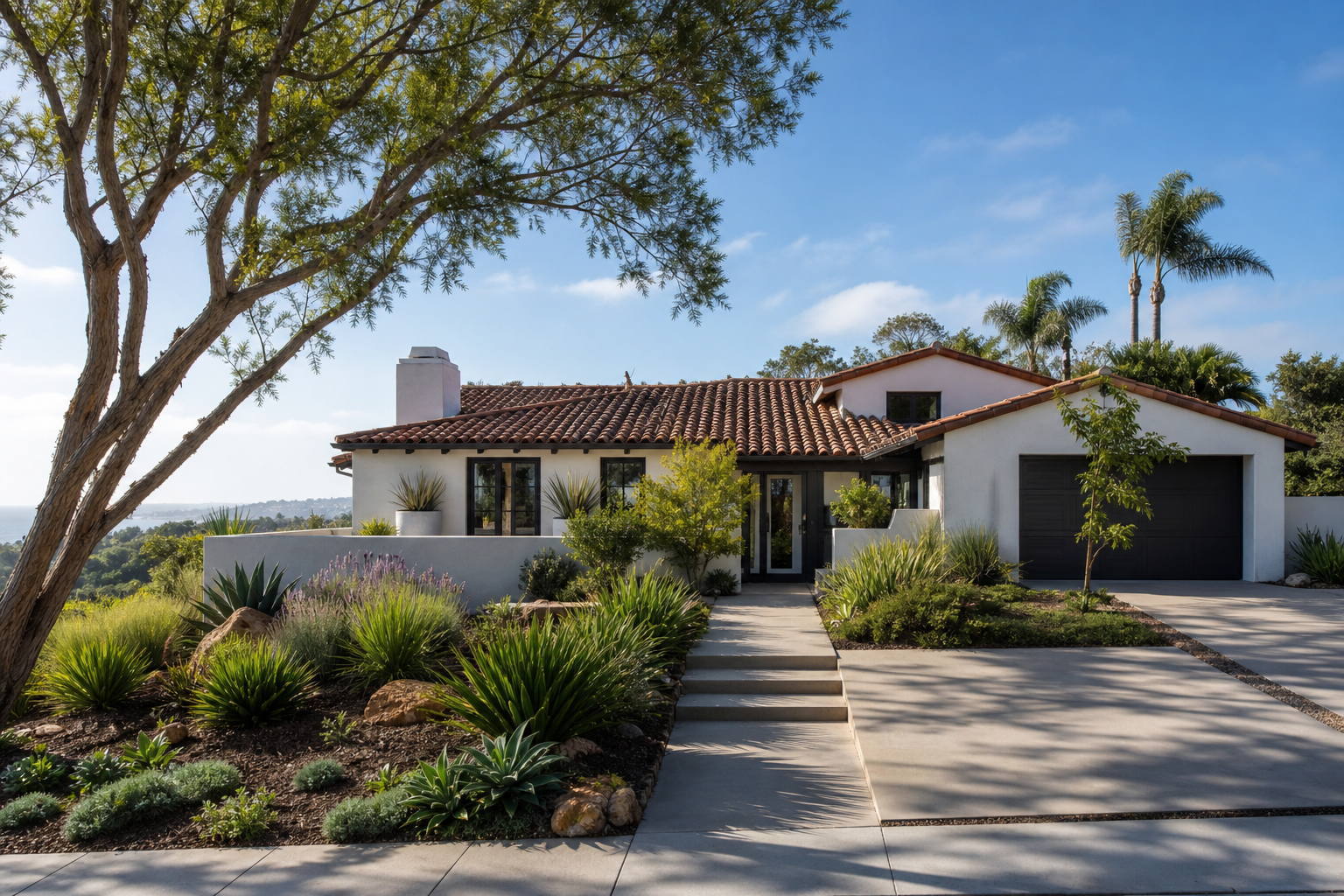
  • Selling a Home With Foundation Issues in North County San Diego

    Selling a Home With Foundation Issues in North County San Diego

    You can sell a North County San Diego home with foundation or structural issues, but California law requires full disclosure of all known defects. Expect longer days on market, lower offers, lender scrutiny, and escrow renegotiations, unless you price the condition in from day one or complete targeted repairs before listing.

    Can you sell a North County San Diego home with foundation or structural problems?

    Yes, but the process looks different than a clean-condition sale. California requires sellers to disclose all known material defects, and foundation or structural issues sit at the top of that list. How you handle the disclosure, pricing, and escrow negotiation determines whether you close smoothly or watch deals fall apart after inspection.

    Key Takeaways

    • California law requires sellers to disclose known foundation and structural defects in writing before closing, concealing them is not an option and creates serious legal exposure.
    • Recent local market data shows median days on market ranging from 33 days in Carlsbad to 47 days in San Marcos for all homes, structurally compromised properties typically run longer than those area medians unless pricing or pre-listing repairs offset the perceived risk.
    • When a lender’s appraiser flags active foundation movement or unpermitted structural work, the loan can be conditioned on repairs or declined entirely, pushing the deal toward cash buyers or renovation-oriented financing.
    • Repair credits negotiated through escrow are the most common resolution in North County, they let a deal close without the seller completing work, but buyers capitalize the full repair risk into what they’re willing to accept.
    • Attaching an engineer’s report and permit history to your disclosure package before listing is the single most effective way to reduce escrow friction and keep buyers from cancelling under their inspection contingency.

    What does California law require you to disclose about foundation or structural issues?

    California law requires sellers to disclose all known material defects, and foundation movement, structural reinforcement, prior engineering reports, and any past repair work all qualify as material facts. There is no gray area here, if you know about it, it goes in writing.

    In practice, that means more than checking a box on the standard disclosure form. I walk my sellers through attaching the actual documentation: the engineer’s report, the permit records for any prior repair, and a clear statement of whether the issue is ongoing or considered stabilized. That level of transparency isn’t just legally sound, it’s strategically smart.

    Here’s why: buyers in North County are highly inspection-driven. When they feel surprised by something they discover mid-escrow, the deal usually unravels. When the same information is sitting in the disclosure package from day one, buyers who proceed do so with eyes open, and you lose far fewer of them to last-minute cancellations.

    What counts as a material structural defect in San Diego County?

    Regional practice consistently treats the following as material and disclosable: visible foundation cracks or movement, uneven floors tied to settling or shifting, prior structural reinforcement (even if permitted and completed), drainage or soil conditions that contributed to movement, and any engineering or geotechnical reports you have in your possession. If a prior owner disclosed something to you when you bought the home, that disclosure history carries forward.

    The San Diego County Assessor/Recorder/County Clerk handles the recording side of your transaction, but your disclosure obligations flow from California real estate law and the forms your agent prepares. Get those forms right from the start.

    How do foundation issues affect pricing and days on market in North County?

    The honest answer is that structural issues almost always extend days on market and compress what buyers are willing to pay, the question is by how much, and that depends on how well you’ve prepared the listing.

    Recent local market data shows where the baseline sits across North County right now:

    AreaMedian Sale PriceMedian Days on Market
    Encinitas$2,230,00040
    Carlsbad$1,330,00033
    San Marcos$995,00047
    Escondido$873,00035
    Fallbrook$870,00042

    Those are area-level medians for all homes, clean condition included. A home with visible foundation issues or a disclosed structural history will typically run longer than its area’s median unless the price reflects the condition from the first day on market. In a market where well-priced, clean homes can move in under two weeks, a structurally compromised property that’s priced as if it were pristine will sit, and sitting costs you more than a well-calibrated list price ever would.

    Pricing right from the start is something I emphasize with every seller I work with in this market, and it matters even more when the property has a known condition issue. You can read more about that approach in my post on North County San Diego home pricing strategy.

    Fix it before listing, or sell as-is with a credit?

    This is the question I get most often from sellers in this situation, and the answer genuinely depends on your specific property, timeline, and the nature of the issue.

    Pre-listing repairs make sense when the issue is clearly defined, the repair cost is known, licensed contractors are available, and the work can be permitted and documented before you go on market. A stabilized, permitted repair with engineering sign-off gives conventional buyers and their lenders something concrete to work with, and it can meaningfully expand your buyer pool beyond cash-only offers.

    Selling as-is with a repair credit makes sense when the scope of work is uncertain, the timeline is tight, or you don’t want to manage a construction project before listing. The trade-off is that buyers will capitalize the full repair risk, not just the repair cost, into what they offer. They’re pricing in the uncertainty, not just the contractor’s bid.

    There’s no universally right answer. What matters is that you make the choice deliberately, with a clear-eyed view of how each path affects your net proceeds and timeline. That’s exactly the kind of analysis I run with sellers before we ever pick a list price.

    What happens in escrow when structural issues are involved?

    Even with thorough pre-listing disclosure, escrow on a structurally compromised home involves more moving parts than a standard transaction. Here’s what typically plays out in North County.

    The inspection contingency is where deals live or die

    North County buyers almost universally write inspection contingencies into their offers. When a general home inspection flags structural concerns, buyers typically respond in one of four ways:

    • Order a follow-up inspection from a licensed structural engineer or foundation specialist
    • Request seller repairs on specific safety or stabilization items before closing
    • Request a repair credit applied through escrow, reducing the net proceeds at closing
    • Cancel under the contingency period, especially when an engineer describes the condition as high-risk or ongoing

    Pre-listing disclosure doesn’t eliminate these responses, but it does change the tone. Buyers who knew about the issue going in are far less likely to panic and cancel than buyers who feel blindsided by an inspection report. That’s a real difference in deal survival rates.

    How repair credits work through escrow in California

    In California, repair credits are handled by the escrow officer as a closing adjustment, typically structured as a general credit to the buyer rather than a line-item labeled “foundation repair.” Your escrow officer will document the agreed credit in the closing instructions, and it reduces your net proceeds at settlement.

    The negotiation over the credit amount is where your agent’s skill matters most. Buyers will often anchor to the highest contractor estimate they can find; an experienced agent can counter with documented repair scopes, engineer sign-offs, and comparable sales of similar condition properties to keep the credit grounded in reality. The Consumer Financial Protection Bureau’s home-buying resources offer useful background on how closing adjustments and credits flow through the settlement process.

    What lenders require when structural issues are flagged

    This is where many sellers first realize that a structural issue isn’t just a negotiating problem, it’s a financing problem. When a lender’s appraiser documents active foundation movement, structural instability, or unpermitted structural work, the loan can be conditioned on repairs being completed before closing, the appraised value can be reduced (which affects the buyer’s loan-to-value ratio), or the lender can decline to fund the loan entirely.

    The FHA Single Family Housing Policy Handbook and Fannie Mae’s Selling Guide both address property condition standards that appraisers are required to apply, and structural deficiencies can trigger “subject to repair” conditions that must be resolved before the loan closes. When that happens, conventional financing effectively falls away, and your realistic buyer pool shifts toward cash purchasers or buyers using renovation-oriented loan products.

    That shift matters for your timeline and your leverage. Cash buyers and investors will close, but they price in the risk aggressively. Understanding that dynamic before you list is how you set realistic expectations for what the market will actually bear.

    For a deeper look at what happens when a North County listing struggles to attract offers, my post on how to fix an expired listing in North County covers many of the same dynamics from a different angle.

    If you’re weighing all of this and wondering whether now is even the right time to sell, it’s worth a conversation before you commit to a path. Every situation is different, and the only way to know what your specific home will realistically net, given its condition, location, and the current market, is to run the numbers with someone who knows this market. Request a free home valuation here and I’ll give you a straight answer.

    If you’d like to read reviews from sellers and buyers I’ve worked with, you can find them on Google and Zillow.

    Frequently Asked Questions

    Can I sell my North County San Diego home if it has foundation problems, or will buyers automatically walk away?

    You can absolutely sell a home with foundation problems in North County, buyers won’t automatically walk away, but the pool of buyers willing to proceed narrows. Conventional buyers using standard financing may exit if lenders condition the loan on repairs; cash buyers and investors are more likely to close, though they expect pricing that reflects the condition. Thorough disclosure and a realistic list price are the two factors that most reliably keep deals together.

    Do I have to disclose past foundation repairs when selling in San Diego County?

    Yes. California law requires sellers to disclose all known material defects, and past foundation repairs, even completed, permitted ones, are considered material facts. The disclosure should include what was repaired, when, by whom, whether permits were pulled, and whether the issue is considered stabilized or ongoing. Attaching the original engineering report and permit records to your disclosure package is the clearest way to satisfy this requirement and reduce buyer anxiety.

    Will my buyer’s lender approve a mortgage if the home inspection finds structural issues?

    It depends on the severity and whether the issues are active or stabilized. Lenders following Fannie Mae or FHA guidelines may require repairs to be completed before funding if the appraiser flags structural deficiencies as affecting habitability or safety. In those cases, the deal either pauses for repairs, shifts to a renovation loan product, or moves toward a cash buyer. Getting an engineer’s report before listing helps you anticipate which category your home falls into.

    Is it better to fix foundation problems before listing or sell as-is with a repair credit?

    Pre-listing repairs expand your buyer pool to include conventional financing and typically generate stronger offers, but they require time, money, and a clear repair scope. Selling as-is with a repair credit closes faster and avoids construction disruption, but buyers price in the full uncertainty, not just the repair cost, so the credit is almost always larger than what a repair would have cost you. The right answer depends on your timeline, the nature of the issue, and what the local market will bear for your specific property.

    What happens in escrow if the buyer discovers new foundation issues after the inspection?

    If an inspection uncovers foundation issues not previously disclosed, the buyer can request a price reduction, a repair credit through escrow, specific seller repairs before closing, or cancel under their inspection contingency. In North County, buyers who feel surprised by structural findings are more likely to cancel than buyers who knew about the condition from the start, which is the strongest argument for thorough pre-listing disclosure. Your escrow officer will document any agreed resolution in the closing instructions.

    The bottom line on structural issues and your North County sale

    Foundation and structural issues don’t have to kill a sale, but they do require a different strategy than a clean-condition listing. Full disclosure, realistic pricing, and a clear escrow plan are what separate deals that close from deals that fall apart in contingency.

    I’ve guided sellers through exactly this situation across Carlsbad, Encinitas, San Marcos, Escondido, and the rest of North County for more than 25 years. If you’re dealing with a structural issue and trying to figure out your best path forward, request a free home valuation and let’s talk through your options before you list.

    About Matthew Sorensen

    Matthew Sorensen is a REALTOR® and Broker Associate with Coldwell Banker Realty who has served the North County San Diego market for more than 25 years, guiding buyers and sellers with concierge-level service and deep experience buying, rehabbing, and managing homes.

    Coldwell Banker Realty · (858) 204-6288

    Equal Housing Opportunity. Matthew Sorensen is a licensed Broker Associate regulated by the California Department of Real Estate. This article is general information only and does not constitute legal, tax, or financial advice, confirm your specific costs, disclosures, and transaction terms with your escrow officer, tax advisor, or lender.

  • Pricing Encinitas Coastal Homes Right From Day One

    Pricing Encinitas Coastal Homes Right From Day One

    Encinitas coastal homes are selling close to their original list prices in 2026, with a sale-to-list ratio near 98.7%. Overpricing by even 5-10% shifts a home from a fast, full-price sale to a drawn-out price-reduction cycle. Getting the number right on day one is the single most important decision a coastal seller makes.

    Pricing Encinitas Coastal Homes Right From Day One

    How should I price my Encinitas coastal home to sell quickly and for top dollar?

    In 2026, Encinitas coastal homes are selling very close to their original list prices, the year-to-date sale-to-list ratio through July 2026 is approximately 98.7%, according to San Diego Association of REALTORS® ZIP-level data for 92024. That means the market rewards accurate pricing and punishes overpricing with extended days on market and repeated reductions. The sellers who net the most are the ones who price correctly from the start, not the ones who test the ceiling and chase the market down.

    Key Takeaways

    • The year-to-date median sale price for detached homes in Encinitas (ZIP 92024) rose from approximately $2,128,500 to $2,400,000 through July 2026, a 12.8% increase year-over-year, per SDAR data.
    • Encinitas homes sold in a median of 21 days over the three months ending July 2026, down from 27 days a year earlier, but only for correctly priced listings.
    • The sale-to-list ratio in 92024 reached approximately 98.7% year-to-date through July 2026, meaning buyers are not negotiating large discounts off list, they are simply passing on overpriced homes.
    • West of I-5 commands a meaningful premium over east-of-I-5 Encinitas neighborhoods, and that gap must be reflected in the list price, not discovered after weeks of silence.
    • Homes that sit 45 to 60-plus days before receiving an offer still face a full escrow period on top of that, compounding carrying costs and signaling distress to subsequent buyers.

    Why does Encinitas coastal pricing punish overpricing more than other markets?

    The short answer: buyers here are sophisticated, well-represented, and have options. They are not going to fall in love with a number that doesn’t match the data.

    According to Redfin’s Encinitas market data, the median sale price over the three months ending July 2026 was approximately $2.2 million, up 14.4% year-over-year, with transaction volume also rising, 158 homes sold in July 2026 versus 144 in July 2025. That’s a genuinely strong market. But strong markets don’t protect overpriced listings. They just make the contrast more obvious.

    Here’s the dynamic I see play out repeatedly: a seller prices 8 to 10% above where the data points, expecting to negotiate down. Buyers see the DOM climbing. By week three, the listing starts to feel stale. A price reduction brings a fresh wave of attention, but now those buyers wonder what’s wrong with the property. The seller ends up netting less than they would have with an accurate day-one price, and they’ve added weeks (sometimes months) to their timeline.

    The SDAR data for ZIP 92024 makes this concrete: a 98.7% sale-to-list ratio means buyers aren’t negotiating sellers down from inflated prices, they’re simply moving on. The homes that sell are the ones priced where the market actually is.

    For a deeper look at how I approach this across North County, see my post on pricing your Encinitas home correctly.

    What the area comparison tells you

    Encinitas sits in a distinct tier among North County coastal markets. Here’s how recent local market data compares across the region (trailing approximately 90 days, as of September 2026):

    Area Median Sale Price Median Days on Market
    Encinitas$2,050,00060
    Carlsbad$1,329,30032
    Del Mar$3,825,00051
    Escondido$865,00028
    Fallbrook$900,00041
    Oceanside$890,00017
    Solana Beach$2,132,50047

    Notice that Encinitas carries a longer median days on market than most of its neighbors. That’s not a sign of a weak market, it reflects the complexity and price sensitivity of coastal luxury product. Buyers at the $2 million-plus level are deliberate. They compare across Encinitas, Solana Beach, and Del Mar. An overpriced listing doesn’t just sit; it actively educates buyers that competing properties are better value.

    What actually drives pricing differences within Encinitas coastal neighborhoods?

    This is where national data tools, Zestimates, automated valuations, county assessor records, fall apart. They can’t see the things that move the needle most on a coastal property.

    West of I-5 versus east of I-5

    This is the single biggest pricing variable in Encinitas, and it’s not subtle. West-of-I-5 properties, whether in Leucadia, Old Encinitas, or the coastal bluff areas, carry a premium that reflects walkability to the beach, proximity to Highway 101, and the lifestyle that buyers in this price range are explicitly paying for. East-of-I-5 neighborhoods like Village Park and New Encinitas offer excellent value and strong schools, but they serve a different buyer and a different price point.

    Pricing a west-of-I-5 home using east-of-I-5 comps, or vice versa, is one of the most common mistakes I see in this market. The freeway is a genuine pricing boundary, and any comparative market analysis that blurs it will produce a number you can’t defend to a serious buyer.

    View corridors, lot orientation, and micro-location

    In Cardiff-by-the-Sea and along the Leucadia bluffs, small differences in elevation, lot orientation, and power-line placement can shift perceived value significantly. A home with a clear ocean view from the living room and primary bedroom commands a premium that a home two streets back with a partial view does not, even if they’re the same square footage and build year. Cardiff’s steep topography makes this especially pronounced; the view corridor from one property can be completely blocked by a neighbor’s roofline or a utility pole.

    Pricing these premiums correctly requires pulling comps that actually match the view situation, not just the neighborhood and square footage. That’s a judgment call that takes local knowledge, not an algorithm.

    Condition and design relative to the price tier

    At the $2 million-plus level, buyers expect a certain standard of finish. A dated kitchen or original 1980s bathrooms in a home listed at $2.3 million will generate showings but not offers, buyers will either pass or come in well below list. The correct response is to price the condition accurately from the start, not to list at a renovated-comparable price and hope someone falls in love.

    Conversely, a thoughtfully remodeled Leucadia bungalow with modern finishes, an ADU, and a short walk to Moonlight Beach can legitimately push past the area median, but only if the pricing is anchored to actual closed sales of comparable updated product, not wishful thinking about what the seller invested in the renovation.

    ADU and redevelopment value in Old Encinitas

    Zoning in the Old Encinitas coastal zone creates embedded value that automated tools miss entirely. Lots that support an accessory dwelling unit, or that carry redevelopment potential under California’s ADU laws, are worth more to a specific buyer segment. That value has to be priced in explicitly, with documentation ready, not assumed.

    The escrow and disclosure factor

    In California, residential transactions close through a neutral escrow officer who coordinates title work, document delivery, and fund disbursement. For coastal properties, that process can include HOA document delivery for townhome and condo product, easement review, and any bluff-stability or permit documentation that’s material to the property. Sellers who have these materials organized before listing reduce the renegotiation risk during escrow, which indirectly protects the original list price by giving buyers less to push back on.

    I always walk my sellers through what documentation they’ll need before we set a price, because surprises in escrow are one of the most common reasons a deal renegotiates downward after the fact.

    If you want to understand what questions to ask a listing agent before you hire one, my post on what listing agents should prove before you hire them covers exactly that.

    Broker compensation in any transaction is fully negotiable and not set by law. There is no standard or customary rate, the listing fee is agreed between you and your agent in the listing agreement, and any compensation offered to a buyer’s agent is a separate, optional decision.


    If you’re thinking about listing in Encinitas, I’d genuinely encourage you to read reviews from clients I’ve worked with on Google and Zillow before we talk.

    Frequently Asked Questions

    How do I price my Encinitas coastal home so I don’t end up chasing the market down with repeated price cuts?

    Start with a comparative market analysis built from closed sales of genuinely comparable properties, same side of I-5, similar view situation, similar condition and finish level, from the past 90 days. The SDAR data for ZIP 92024 shows a sale-to-list ratio of approximately 98.7% through July 2026, which means the market is not rewarding inflated list prices with negotiated-down deals; it’s simply bypassing overpriced homes. A data-driven day-one price, even if it feels conservative, consistently outperforms an aspirational price that requires reductions to find a buyer.

    How long are properly priced coastal homes in Encinitas taking to sell in 2026, and what happens if I overprice?

    According to Redfin’s market data, the median days on market for Encinitas over the three months ending July 2026 was 21 days, down from 27 days a year earlier, for homes that were priced correctly. Overpriced homes often sit 45 to 60-plus days before receiving an offer, then still have to complete a full escrow period on top of that, compounding carrying costs and creating a stigma that makes subsequent buyers wonder what’s wrong with the property.

    Are buyers still paying close to asking price for Encinitas coastal properties, or do I need to leave room for big negotiations?

    Buyers are paying very close to list for accurately priced homes. The SDAR data for 92024 shows a year-to-date sale-to-list ratio of approximately 98.7% through July 2026. That does not mean you should pad your price expecting to negotiate, it means buyers who see an overpriced listing simply move on rather than making a low offer, so the negotiation room you built in just becomes days on market.

    How much does being west of I-5 versus east of I-5 really affect what I can list my Encinitas home for?

    The I-5 corridor is a genuine pricing boundary in Encinitas, not a minor variable. West-of-I-5 properties carry a premium tied to beach proximity, walkability to Highway 101, and the coastal lifestyle that buyers at this price point are specifically seeking. The gap varies by street, condition, and view, but it is substantial enough that pricing a west-of-I-5 home using east-of-I-5 comps, or vice versa, will produce a number you can’t defend to a serious buyer. Any accurate CMA must separate these two sub-markets.

    What local market stats should I look at when deciding on a list price in Encinitas?

    Start with SDAR’s ZIP-level data for 92024, which tracks median sale price, days on market, and sale-to-list ratio on a year-to-date basis, those three numbers together tell you how fast the market is moving and how much pricing discipline buyers are enforcing. Supplement that with Redfin’s Encinitas market page for recent transaction volume trends. Neither source replaces a hand-pulled CMA from your agent using actual closed sales that match your property’s specific location, view, and condition, but they give you a baseline to evaluate what your agent is telling you.

    If the Encinitas market is still strong, why do some coastal homes sit for 60-plus days without selling?

    Almost always, the answer is price. Recent local market data shows the area median days on market at 60 days across all active and recently sold inventory, but that average includes homes that priced correctly and sold in three weeks alongside homes that overpriced and sat for months. At the $2 million-plus level, the buyer pool is smaller and more deliberate; a home that doesn’t match its price relative to comparable sold properties simply waits. Strong market conditions lift all boats, but they don’t override the fundamental rule that buyers compare everything available to them and choose the best value.


    The bottom line: in a market where homes are selling at 98.7% of original list price and the median sale price for detached homes in 92024 has reached approximately $2.4 million year-to-date through July 2026, getting your number right on day one is the highest-leverage decision you’ll make as a seller. I’ve spent more than 25 years pricing homes in this market, and I know the difference between a number that attracts offers and one that generates showings without results.

    If you’re thinking about listing your Encinitas coastal property, start with a free home valuation, I’ll pull the actual comps, walk you through the sub-market variables, and give you a defensible number before you make any decisions.

    About Matthew Sorensen

    Matthew Sorensen is a Broker Associate with Coldwell Banker Realty who has served the North County San Diego market for more than 25 years, guiding buyers and sellers with concierge-level service and deep experience buying, rehabbing, and managing homes throughout Encinitas, Carlsbad, Del Mar, and the broader coastal corridor.

    Coldwell Banker Realty · (858) 204-6288

    Equal Housing Opportunity. Matthew Sorensen is a Broker Associate licensed by the California Department of Real Estate. This article is general market information only and does not constitute legal, tax, or financial advice. Confirm your specific costs and transaction details with your escrow officer, tax advisor, or lender.