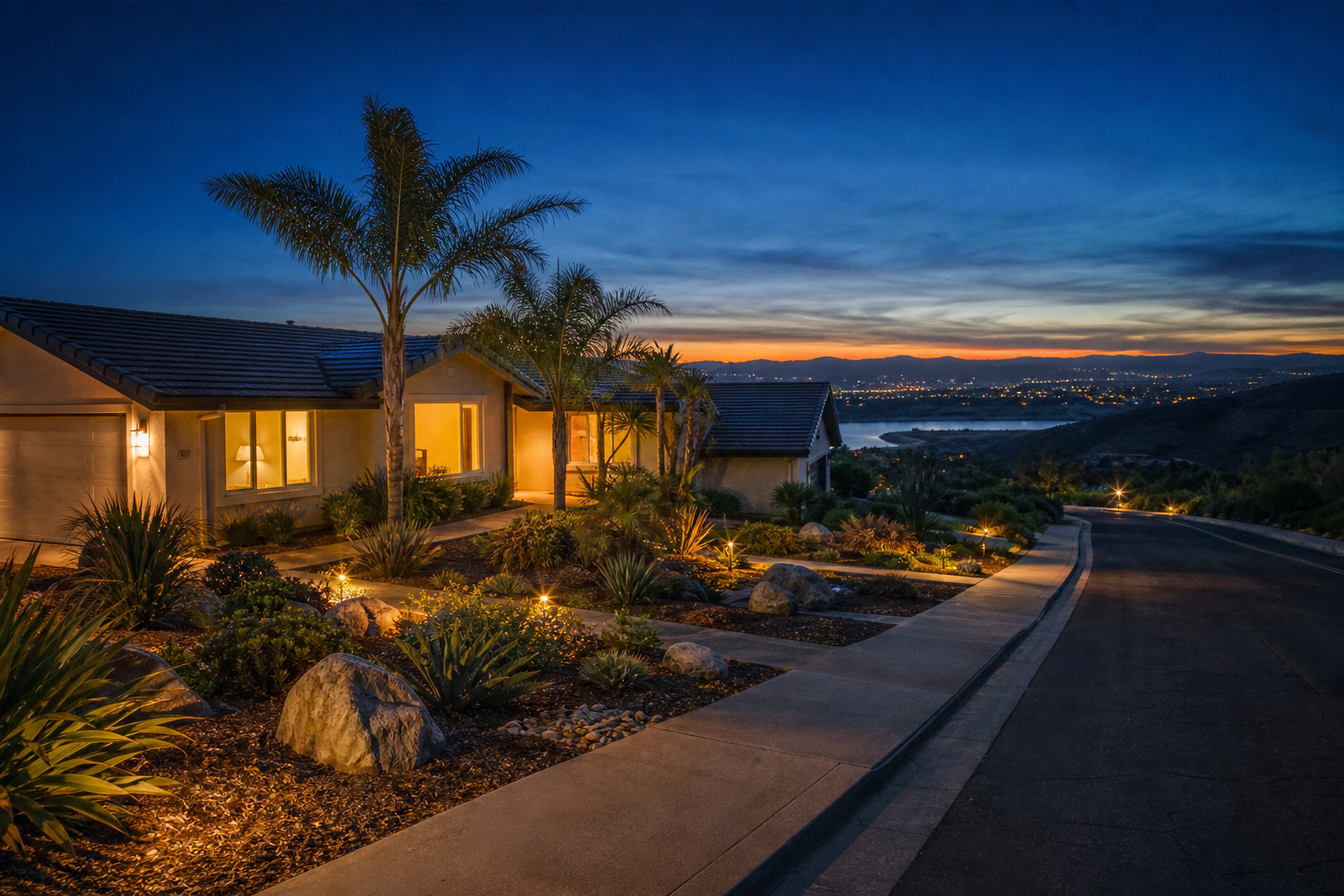
Vista offers North County San Diego investors a value-forward entry point for rehab projects, with a median sale price around $799K–$872K, broad price spread, and renovated homes typically going to pending in roughly 30 days, making it one of the more accessible fix-and-flip markets in the region.
Is Vista, CA a good market for rehab property investment in 2026?
Vista is one of the more compelling value-add markets in North County San Diego right now. With a median sale price in the high $700Ks to low $870Ks, a broad price spread that creates real acquisition opportunities, and renovated homes moving to pending in roughly 30 days, investors can find dated inventory at a meaningful discount to coastal neighbors and still exit into a strong regional buyer pool.
Why Vista Makes Sense for Rehab Investors in 2026
I’ve worked this market for more than 25 years, and Vista keeps coming up in conversations with serious investors for a straightforward reason: you can still buy older, dated homes here at a price that leaves room to add value. That’s getting harder to say in Carlsbad or Encinitas.
According to Resideline’s 2026 Vista market review, across 389 closed sales over the first half of 2026, the median closing price was $799,000. The middle half of those sales closed between $560,000 and $980,000, a wide spread that tells you something important: there’s a genuine lower tier of inventory where investors can get in, and a meaningful upper tier where renovated product can exit.
Meanwhile, Redfin’s Vista city page shows the median sale price for the three months ending June 2026 at approximately $872,000 (down about 4.2% year-over-year). That modest softening from peak levels is actually useful for buyers, it expands the pool of motivated sellers and creates more negotiating room on acquisition.
The key investment thesis here is simple: Vista sits below the regional median for North County detached homes, but it draws from the same high-income buyer pool as pricier coastal cities. Renovated, move-in-ready product at the right price point sells. The math works when you buy at a genuine discount to current market value and deliver the finish quality today’s buyers expect.
How Vista Compares to Other North County Markets
Context matters when you’re underwriting a rehab deal. Here’s how Vista stacks up against neighboring North County markets based on recent aggregated public listing data (trailing approximately 90 days, as of August 2026):
| Area | Median Sale Price | Median Days on Market |
|---|---|---|
| Encinitas | $1,964,500 | 28 |
| Carlsbad | $1,430,000 | 24 |
| San Marcos | $960,000 | 44 |
| Del Mar | $3,825,000 | 58 |
| Oceanside | $872,500 | 11 |
| Solana Beach | $2,054,500 | 43 |
Vista’s median sits meaningfully below Carlsbad and Encinitas, which is exactly what creates the value-add opportunity. Buyers priced out of coastal markets are actively looking at Vista, and when you deliver a well-renovated home, you’re competing for that same demand. According to Realtor.com’s Vista market snapshot (most recent data from late 2025), homes in Vista were selling at approximately 99% of list price, meaning appropriately priced product doesn’t sit.
Where to Find Rehab-Grade Inventory in Vista
Vista has meaningful intra-city price variation, and knowing where to look matters. Realtor.com’s 2025 neighborhood data shows submarkets like Ocean Hills and College Area carrying medians above $1.1 million, while more affordable pockets like the Business District area come in well below the citywide median. Keep in mind this is prior-year context, specific neighborhood pricing shifts over time, but the pattern of wide variation inside Vista holds.
For rehab investors, the practical implication is this: the lower end of Vista’s price band (the $560K–$750K range from Resideline’s data) is where you’ll find aging tract homes, dated kitchens and baths, deferred maintenance, and the kinds of sellers who need a clean, certain transaction. That’s your acquisition target. The upper tier, $900K and above, is where renovated product with modern finishes and permitted work can realistically exit.
If you’re also thinking about probate-sourced inventory as an acquisition channel, I’ve written specifically about the as-is vs. repair decision for Vista probate homes, it’s a related question that comes up constantly in this market.
What Rehab Investors Need to Know Before They Buy in Vista
Pace of Sales and Holding Period Planning
Zillow’s February 2026 Vista snapshot shows typical homes going to pending in around 30 days. Monthly sales volume has stayed active, local data tracked by Cash For Houses CA shows 74 sales in Vista in June 2026 alone, even as prices have moderated slightly. For rehab investors, that pace matters: once your renovation is complete and the home is priced correctly, you’re not looking at a six-month sit. Holding periods measured in months, not quarters, are realistic for well-executed projects.
The bigger variable in your timeline is the rehab itself. Permitting timelines, contractor availability, and scope creep are where projects stall. Build conservatively when you’re projecting your hold period.
Price Softening and What It Means for Your Margins
Redfin’s Q2 2026 data shows Vista median prices down about 4–7% year-over-year depending on the metric. Houzeo’s 2026 Vista overview forecasts a 2–4% price increase for the year, though that’s a model-based estimate rather than verified sales data, treat it as soft color, not underwriting input.
The practical takeaway: don’t underwrite to 2022 or 2023 peak prices. Buy at a discount to where the market is today, not where it was. The investors I see get into trouble in Vista are the ones who anchored their ARV (after-repair value) to a comp from 18 months ago. Use current closed sales, current price per square foot, and conservative renovation budgets.
Resideline’s data puts the median sold price per square foot for Vista at $470 over the first half of 2026, with the middle half ranging from $400 to $551 per square foot. That spread gives you a real target range for what renovated product should achieve, and what you’re risking if your finish quality or pricing misses the mark.
The California Disclosure and Escrow Reality for Rehab Resales
When you sell a rehabbed property in Vista, California’s disclosure requirements apply regardless of whether you occupied the home. You’ll typically be expected to complete a Seller Property Questionnaire (an industry-standard California Association of REALTORS® form), disclosing the scope of renovations, whether work was permitted, and any known defects. Keep detailed records, contracts, invoices, permits, from day one. Gaps in that paper trail create legal exposure at resale.
Closings in California are handled through an escrow officer at an independent escrow company or title company’s escrow division. For rehab investors, escrow is especially important: it handles payoff of hard-money loans, contractor lien releases, and confirmation that permit issues are cleared before the deed records. Don’t treat escrow as a formality, for a rehab resale, it’s where a lot of loose ends get resolved.
Documentary Transfer Tax: Know the Rate, Negotiate the Allocation
Under California Revenue and Taxation Code Section 11911, San Diego County’s documentary transfer tax is imposed at $0.55 per $500 (or fraction thereof) of real property value at recording. That’s a fixed statutory rate, it’s not negotiable. What is negotiable is who pays it: buyer, seller, or a split. Local custom often allocates it to the seller, but in rehab deals, investors sometimes negotiate cost sharing or buyer-paid transfer tax in exchange for price adjustments. Confirm the allocation in your purchase agreement, don’t assume.
If you’re also thinking about a 1031 exchange to defer taxes on your gain, I’ve covered how to choose the right agent for that strategy in this Vista 1031 exchange guide.
Your specific numbers, net proceeds, total cost categories, what a given deal actually pencils to, depend on your acquisition price, renovation scope, financing structure, and timing. That’s the conversation to have before you make an offer, not after. I walk investors through exactly this kind of analysis before they commit to a deal.
Before you start running numbers on a Vista rehab, I’d encourage you to read what NAR’s research division publishes on investor activity and market conditions, it’s useful national context, but pair it with local data. National models don’t capture Vista’s specific price bands or neighborhood variation.
—I’ve helped investors find, evaluate, and sell rehab properties across North County San Diego for over 25 years. If you’re looking at Vista deals and want a local read on what a specific property could realistically achieve after renovation, let’s talk through it. You can request a free home valuation and market analysis here, I’ll give you a straight answer on what the numbers look like today.
See what other investors and clients have said about working with me on Google and Zillow.
Frequently Asked Questions: Vista Rehab Properties
Is Vista a good place to invest in rehab properties compared to other North County San Diego cities?
Yes, Vista is one of the more accessible value-add markets in North County. Its median sale price, around $799K–$872K based on the most recent 2026 data, sits well below Carlsbad ($1.43M) and Encinitas ($1.96M), which means lower acquisition costs while still drawing from the same regional buyer pool. The trade-off is that margins depend on disciplined buying and renovation quality; this isn’t a market where rising prices bail out a bad deal.
What price range are most fix-and-flip opportunities in Vista selling for in 2026?
According to Resideline’s six-month 2026 data, the middle half of Vista sales closed between $560,000 and $980,000, with a median of $799,000. Rehab-grade inventory, older, dated homes with deferred maintenance, typically surfaces in the lower portion of that band, roughly $560K–$750K, while renovated product can realistically target the $850K–$980K range depending on location and finish level.
How long do renovated homes in Vista usually take to sell once they hit the market?
Zillow’s February 2026 data shows typical Vista homes going to pending in around 30 days, and active monthly sales volume (74 closings in June 2026 alone) confirms steady demand. Renovated homes priced correctly for today’s market, not anchored to peak-year comps, should expect a similar pace, though pricing accuracy matters more in a softening environment than it did two or three years ago.
Are Vista home prices going up or cooling down in 2026, and how does that affect rehab ROI?
Redfin’s Q2 2026 data shows Vista’s median sale price down roughly 4–7% year-over-year, reflecting a normalization from pandemic-era peaks rather than a distressed market. For rehab investors, the implication is to underwrite conservatively: use current closed comps for your ARV, not 2022 or 2023 highs. Modest price softening also expands acquisition opportunities as more motivated sellers come to market with dated inventory.
What local market stats should I look at before buying a fixer in Vista?
The three numbers I always pull first are median sold price (currently around $799K–$872K for Vista based on 2026 data), median sold price per square foot ($470 median, $400–$551 middle half per Resideline), and median days on market (roughly 30 days to pending per Zillow). Together they tell you what renovated product should achieve per square foot, what the market will absorb, and how quickly you can expect to exit once your project is done.
Equal Housing Opportunity. Matthew Sorensen is a Broker Associate licensed by the California Department of Real Estate. This article is general information only and does not constitute legal, tax, or financial advice. Verify your own numbers with your escrow officer, tax advisor, or lender before making investment decisions.
- About Matt Sorensen
- Contact Matt

Matt Sorensen is a Broker Associate with Coldwell Banker Realty and a licensed real estate professional since 2000, serving San Marcos and North County San Diego. He specializes in probate and trust home sales, helping trustees and families navigate pricing, disclosures, timelines, and vendor coordination with clear communication and steady guidance. CA DRE Lic. #01293787
Leave a Reply