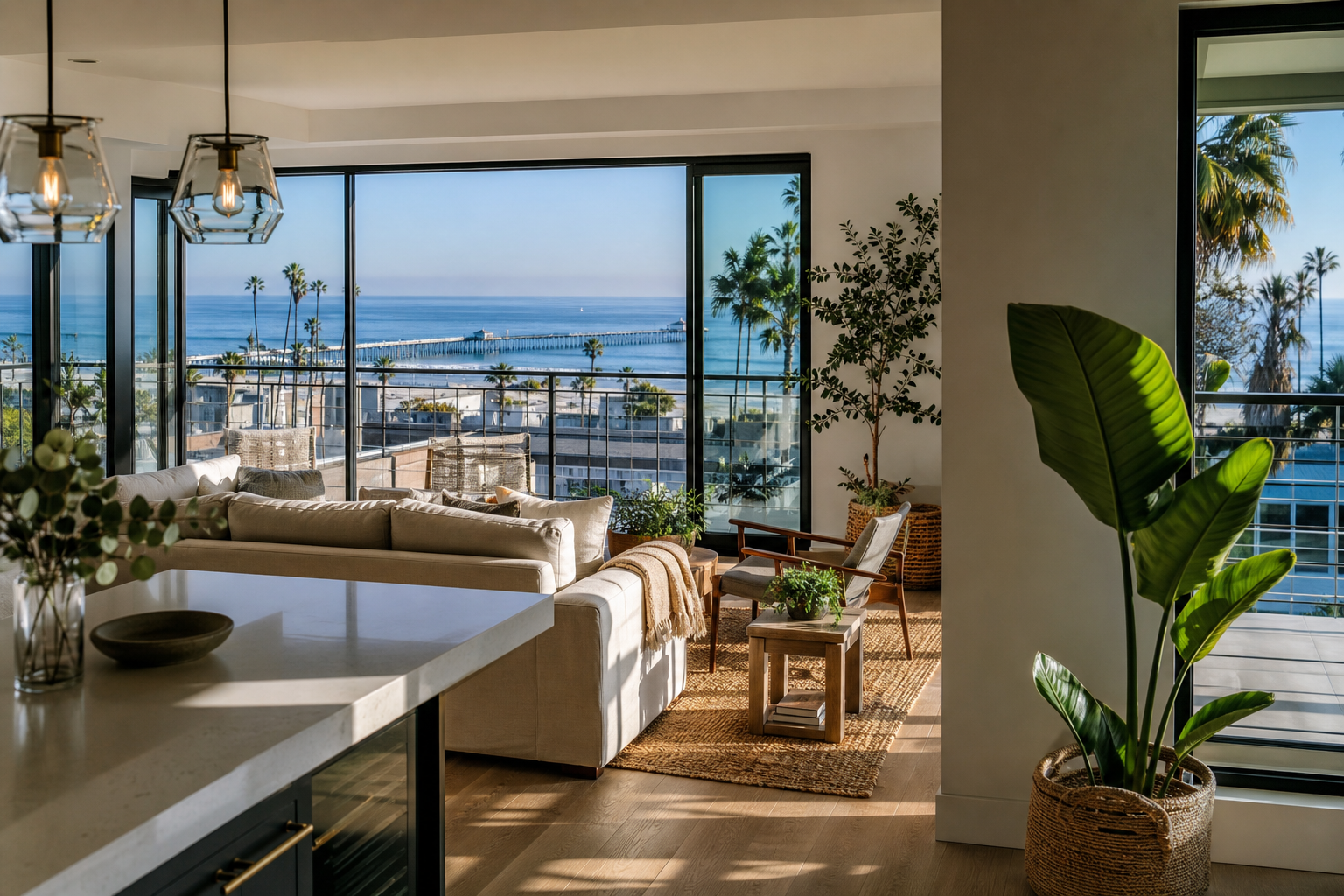
New downtown Oceanside resort development is drawing more tourism, jobs, and nightlife to the pier corridor, tightening coastal inventory and raising the stakes for buyers and short-term rental investors. With a median sale price near $855,000 and homes moving in 24 days, the window to act ahead of full buildout is narrowing.
How is downtown Oceanside’s resort development affecting buyers and investors in 2026?
Downtown Oceanside’s ongoing resort and hotel development is concentrating tourism, jobs, and nightlife activity along the pier corridor in a way that directly affects coastal property values and short-term rental demand. Recent local market data shows a median sale price of $855,000 and a median of just 24 days on market, figures that reflect a competitive coastal market where well-located properties move fast and investor interest is real.
Key Takeaways
- Oceanside’s median sale price sits at $855,000 with homes selling in a median of 24 days, based on recent local market data through September 2026.
- Downtown resort development is concentrating tourism and hospitality employment near the pier, which historically tightens demand for walkable coastal properties.
- Oceanside’s short-term rental rules cap occupancy at a maximum of 14 people per dwelling unit and a maximum of 5 bedrooms per STR, and hosts must collect and remit Transient Occupancy Tax (TOT), verify current requirements directly with the City of Oceanside before purchasing for this purpose.
- With 360 active listings and 145 new listings added in the past 30 days, Oceanside has more supply than most North County coastal markets, but pier-adjacent inventory remains the tightest segment.
- Compared with neighboring coastal markets, Oceanside’s price point offers relative entry-level access to a beachfront investment thesis that Del Mar and Solana Beach have long priced out.
What does the resort buildout actually mean for property values near the pier?
Resort and hotel development in a coastal downtown does a few things at once. It brings construction jobs in the near term, then hospitality and service jobs once properties open. It draws visitors who spend money locally, which supports restaurants, retail, and nightlife. And it signals to the broader market that the area is investable, which tends to pull in buyers who wouldn’t have looked otherwise.
For Oceanside, that signal has been building for several years. The pier corridor has been repositioning from a quiet beach town into a destination with genuine hospitality infrastructure. According to NAR research on tourism-driven coastal markets, areas that attract sustained hospitality investment tend to see above-average price appreciation in the residential properties closest to the activity core, because walkability and proximity to amenities get priced in over time.
That’s consistent with what I’m seeing in Oceanside. Properties within walking distance of the pier are moving faster and holding value better than comparable homes further inland. The 24-day median across the whole city is already tight. Pier-adjacent properties are often tighter than that.
How does Oceanside compare with other North County coastal markets right now?
Context matters here. Oceanside is still meaningfully more accessible than its neighbors to the south, which is part of what makes the investor case compelling. Here’s where the market sits across North County as of September 2026, based on recent local market data:
| Area | Median Sale Price | Median Days on Market |
|---|---|---|
| Del Mar | $3,825,000 | 46 |
| Escondido | $899,000 | 32 |
| Fallbrook | $900,000 | 55 |
| Oceanside | $852,000 | 24 |
| Solana Beach | $2,000,000 | 46 |
Oceanside is moving faster than any market in this comparison, and it’s doing so at a price point that’s roughly one-quarter of Del Mar and less than half of Solana Beach. For a buyer or investor who wants coastal San Diego exposure without the seven-figure entry ticket, Oceanside has been the answer for a while, and the downtown resort buildout is reinforcing that thesis.
That said, every property is different. A condo two blocks from the pier has a different investment profile than a single-family home near the Coast Highway boundary. Your specific numbers depend on the property, its condition, the street, and how you plan to use it, which is exactly the kind of analysis I walk my clients through before they make an offer.
What do short-term rental investors need to know about Oceanside’s rules?
This is where buyers need to slow down and do their homework, because the STR landscape in Oceanside has real constraints that affect what a property can earn.
According to a summary of Oceanside’s short-term rental rules, the city sets a maximum of 14 people per dwelling unit and a maximum of 5 bedrooms for any STR. That puts a ceiling on the larger group-rental strategy that works in some other markets. Hosts are also required to collect and remit Transient Occupancy Tax (TOT) on bookings, a 2026 summary of Oceanside STR law reports that rate at 10% of the booking cost. Verify both the permit requirements and the current TOT rate directly with the City of Oceanside before you close, these rules can and do change, and you want the current code, not a summary.
Beyond the rules themselves, there’s the question of permit availability. Oceanside, like most California coastal cities, has moved toward limiting the total number of STR permits in residential zones. California’s broader regulatory environment around short-term rentals has been tightening, and local jurisdictions have wide latitude to set their own caps and zoning restrictions. If you’re buying specifically for STR income, confirming permit eligibility for the specific parcel before you make an offer is not optional, it’s the first thing I tell buyers who come to me with this strategy.
Does the Coast Highway boundary matter for investors?
Yes, and it’s one of the details that separates buyers who’ve done their research from those who haven’t. Oceanside’s STR zoning and permit eligibility aren’t uniform across the city. Properties west of Coast Highway, closer to the beach and pier, tend to sit in zones with different permit rules than properties east of it. The specific boundary matters when you’re underwriting a rental income projection. Don’t assume a property’s eligibility based on a neighbor’s permit; confirm it for the parcel you’re buying.
The resort development concentrated near the pier is also what makes the western side of that boundary more attractive to tourism-driven demand. More hotel visitors in the area means more spillover demand for vacation rentals, but only if you can legally operate one. That’s the tension every investor in this corridor needs to resolve before committing.
I’ve walked a number of clients through exactly this analysis in Oceanside, and the difference between a property that pencils and one that doesn’t often comes down to a single zoning detail. If you’re serious about this market, reach out before you start making offers, not after.
For more on how the downtown transformation is affecting sellers specifically, I’ve covered that in detail in my post on what Oceanside’s downtown revival means for sellers. And if you want to understand how resort redevelopment connects to home values more broadly, my earlier post on Oceanside beach resort redevelopment and home values goes deeper on the price dynamics.
With 482 homes sold in roughly the past 90 days and 145 new listings added in just the last month, according to recent local market data, Oceanside has more transaction volume than most people expect from a coastal city. That liquidity is actually a positive for investors, it means you have real exit options when the time comes. The National Association of Realtors consistently identifies coastal markets with strong tourism infrastructure as among the most resilient for long-term appreciation, and Oceanside’s current buildout fits that profile well.
If you want to know how Oceanside stacks up for pricing strategy specifically, I’ve also written about how to price a home right in the 2026 North County market, relevant whether you’re buying to hold or eventually planning to sell.
The bottom line: Oceanside’s downtown resort development is a genuine tailwind for coastal property demand. But the STR rules, permit caps, and zoning boundaries mean the opportunity is specific, not blanket. The right property in the right zone with the right permit can be a strong performer. The wrong one, bought without confirming eligibility, can be a frustrating hold. Every situation is different, and the only way to know for sure is to run the numbers with someone who knows this market well.
Read what other buyers and sellers have said about working with me on Google and Zillow.
Frequently Asked Questions
Are Oceanside downtown condos still good for short-term rental income in 2026?
They can be, but eligibility depends on the specific parcel’s zoning and whether STR permits are still available in that zone. Oceanside has moved toward capping permits in residential areas, so confirming permit availability for the exact address before making an offer is essential. The resort buildout is increasing tourism demand near the pier, which supports occupancy rates, but only for properties that can legally operate as STRs.
Can I buy a property near Oceanside Pier and legally use it as a vacation rental?
Possibly, but it requires verifying the specific parcel’s eligibility with the City of Oceanside before you close. Not all properties near the pier sit in zones that allow STR permits, and permit availability within eligible zones can be limited. Confirm the permit status for the address you’re targeting, not just the general area, before you commit.
How does the Coast Highway boundary affect Oceanside investor demand?
Properties west of Coast Highway sit closer to the beach and pier corridor, which is where tourism-driven rental demand concentrates. STR zoning and permit rules also vary by location, so the boundary matters when underwriting a rental income projection. Investors focused on vacation rental income should confirm which side of that boundary a property sits on and what permit rules apply to that specific zone.
Are the new downtown Oceanside resorts pushing up nearby home prices?
The development is contributing to tighter demand for pier-adjacent properties, though it’s one factor among several. Recent local market data shows Oceanside’s median sale price at $855,000 with homes selling in a median of 24 days, faster than any other market in the North County comparison. Properties closest to the resort and hospitality corridor are generally the most competitive segment within that broader market.
How competitive is Oceanside compared with other North County beach markets?
Oceanside is moving faster than Del Mar, Solana Beach, Fallbrook, and Escondido by days-on-market, while offering a significantly lower median price point than its coastal neighbors to the south. That combination of velocity and relative affordability is what makes it attractive to investors who want coastal San Diego exposure without the multi-million-dollar entry cost. The tradeoff is that the most desirable pier-adjacent inventory is tight and moves quickly when it appears.
Oceanside’s downtown transformation is one of the more compelling stories in North County real estate right now, and the window to get ahead of it is still open, but it’s narrowing as the buildout matures. If you’re evaluating a purchase near the pier, whether as a primary home, investment property, or short-term rental, I’d welcome the conversation. Request a free home valuation or consultation here and let’s look at what the numbers actually say for your situation.
Equal Housing Opportunity. Matthew Sorensen is a Broker Associate licensed by the California Department of Real Estate. This article is general information only and does not constitute legal, tax, or financial advice, confirm your own numbers and permit eligibility with your escrow officer, tax advisor, lender, and the City of Oceanside directly.
- About Matt Sorensen
- Contact Matt

Matt Sorensen is a Broker Associate with Coldwell Banker Realty and a licensed real estate professional since 2000, serving San Marcos and North County San Diego. He specializes in probate and trust home sales, helping trustees and families navigate pricing, disclosures, timelines, and vendor coordination with clear communication and steady guidance. CA DRE Lic. #01293787